The question we are asked most often on site is whether your stand needs a wash hand basin. The answer depends on what you are serving and how it is handled. This guide sets out the standard most UK venues work to, what a working basin looks like, and the gel and gloves question.
Do you need a basin?
Food law expects suitable facilities for washing and drying hands hygienically wherever food is handled, including at temporary premises (Regulation 852/2004, Annex II, Chapter III). At exhibitions, the AEV eGuide turns that into a simple test based on risk (the eGuide explained).
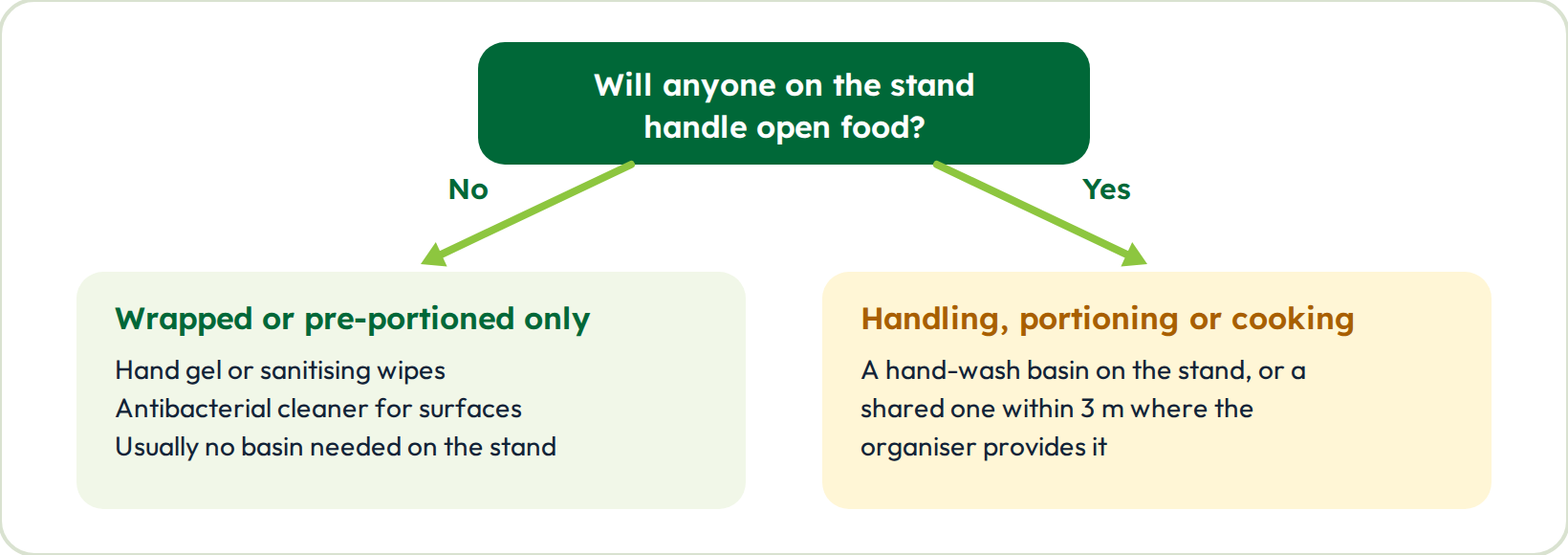
| If you are serving | The eGuide expects |
|---|---|
| Wrapped or pre-portioned food that is not handled on the stand (low risk) | No washing facilities. Hand gel or sanitising wipes, and antibacterial cleaner for surfaces. |
| Ready-to-eat food handled or portioned on the stand, such as cheese, cooked meats or ice cream, or sealed food you heat up (medium risk) | A hand-wash basin with hot water, liquid soap and hand drying, set up before any food preparation begins. A wash-up sink too if you wash utensils on the stand. |
| Cooking raw ingredients, or preparing high-risk raw food such as shellfish or sushi (high risk) | A hand-wash basin with hot and cold water, liquid soap and hand drying, plus separate sinks for washing equipment and washing food. |
Small sealed pots, such as yoghurt drinks, count as wrapped: nobody touches open food, so there is no need for a basin. Cheese cut on the stand, even in small cubes, is open food.
Setting up the basin
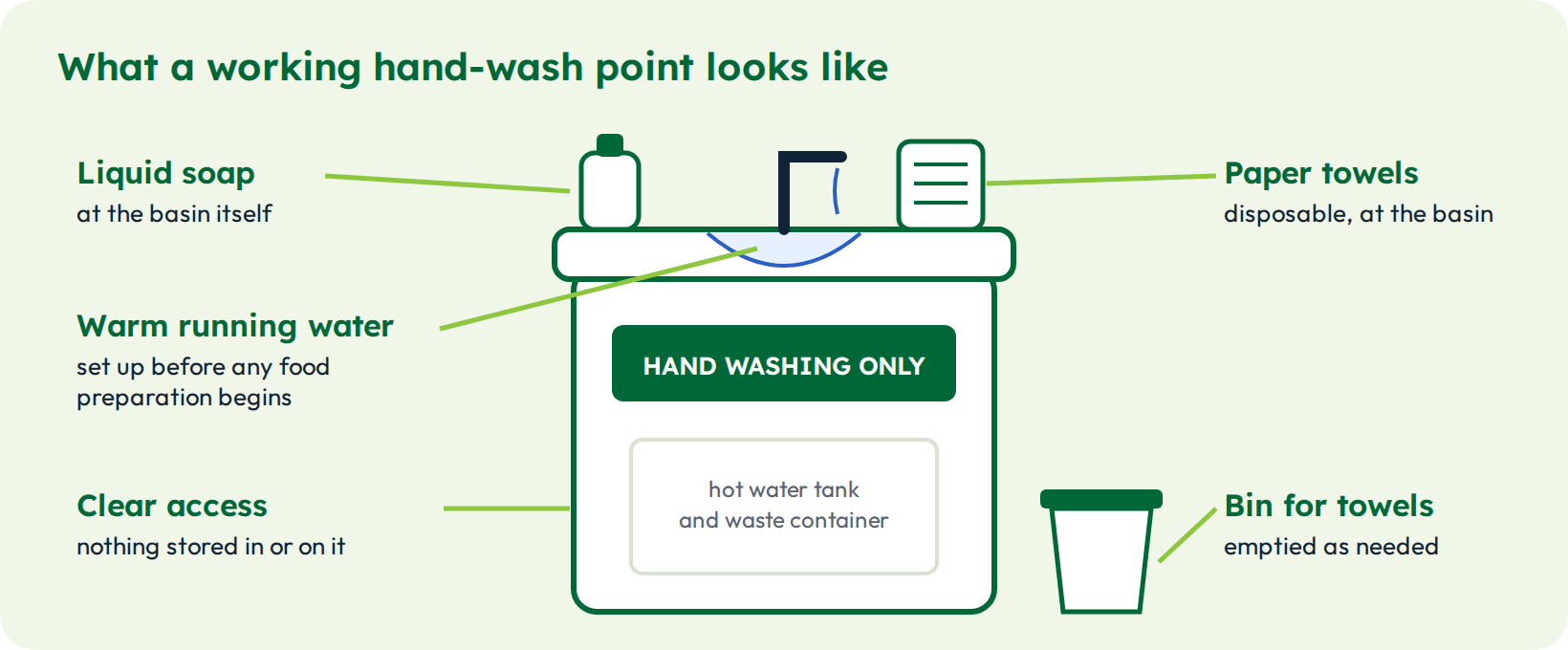
Portable, self-contained hand-wash units are common at events and work well. You do not need a plumbed sink. We recommend checking these points at build-up:
- Warm running water. Units with a heater need a power supply, so order one with your stand electrics.
- Liquid soap and disposable paper towels at the basin, with spares under the counter.
- A bin for used towels.
- Used only for hand washing. A sign saying so helps, and the eGuide recommends one (paragraph 56). Do not rinse utensils or tip drinks into it.
- Easy to reach at all times, not blocked by stock or boxes (paragraph 54).
- Set up and working before any food is prepared.
Shared basins
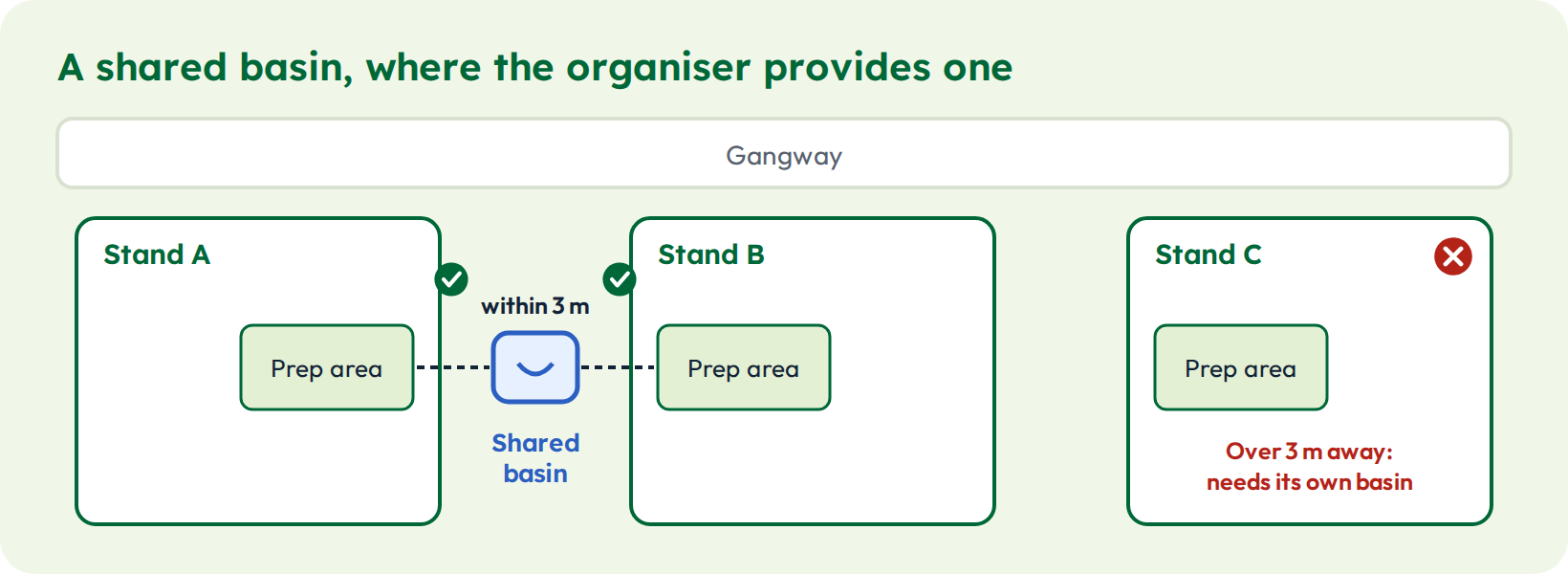
Some organisers provide shared hand-wash or wash-up facilities in the hall. The eGuide allows a shared hand-wash facility where the risk assessment says it is enough, as long as it is no more than 3 metres from any preparation area. In Scotland, hand-washing facilities must be within the preparation area (paragraph 55). The organiser has to make sure shared facilities cope when every stand is busy (paragraph 53).
How to wash hands properly
- Wet hands under warm running water and apply liquid soap.
- Rub palm to palm, then the back of each hand and between the fingers.
- Rub around the thumbs and the fingertips against the palms.
- Rinse, dry thoroughly on a disposable towel and turn the tap off with the towel.
Wash before handling food, after touching raw food or its packaging, after a break or the toilet, after emptying bins or cleaning, after touching your face, phone or money, and before preparing food for someone who has told you about an allergy (FSA Safer food, better business, handwashing).
Hand gel and gloves
Hand gel and sanitiser
Useful as an extra step, never a replacement for washing. Use on clean, dry hands, ideally gel that meets BS EN 1500. It does not work properly on dirty or greasy hands, and the alcohol gels do not kill norovirus.
Gloves
Never a replacement for washing. Wash hands before putting gloves on and after taking them off, change them often, especially between raw and ready-to-eat food, and throw them away after use.
If your stand handles open food and you are relying on gel or gloves instead of a basin, we will advise you to get a basin in place. The organiser decides whether your stand can carry on serving in the meantime.