Getting a food hygiene certificate in the UK can feel like trying to find the right door in a busy service corridor.
I have seen that confusion first-hand with caterers, venue teams, and event organisers who just want a clear route from question to proof of training.
The good news is that the path is simple once you know your job role, the right level of training, and what an Environmental Health Officer will expect to see. Part of this journey involves learning why food hygiene is vital to event safety training across your organization.
Event & Food Safety offers Highfield-accredited Level 2 and Level 3 training, both online and on-site, plus practical tools such as food thermometers that support day-to-day due diligence.
Quick Answer
You get a food hygiene certificate by choosing the right level for your role, booking accredited food hygiene training, passing the assessment, and keeping the certificate as proof of competence.
In the UK, food handlers do not need a certificate by law to prepare or sell food, but food business operators must make sure staff receive instruction, supervision, or training that matches their work.
A clear route looks like this:
- Pick the right level of food hygiene.
- Choose online training or a group session.
- Check the provider is accredited.
- Sit the test and meet the pass mark.
- Save, print, and display your certificate.
Choose The Right Food Hygiene Certificate Level First
The right certificate starts with the work you do, not with the cheapest course on the page.
I always tell teams to start with the job role. If your requirements are unique, knowing where to hire a food safety consultant can save significant time. That cuts out guesswork.
When Level 1 Is Enough
A basic food hygiene certificate or level 1 course suits low-risk roles and induction.
Think of staff with little direct contact with open food, or people who need awareness of food hygiene and safety before they step into wider duties.
This level of food hygiene gives a simple start for people who are new to the sector or who do not handle food as their main task.
Who Needs A Level 2 Food Hygiene Certificate
A level 2 food hygiene certificate suits a food handler who prepares, cooks, serves, packs, or stores open food.
For most people who cater in cafés, stalls, mobile units, venues, and event kitchens, this is the level 2 course that fits. Event & Food Safety presents Level 2 as the foundation for food handlers and for teams working in a catering business.
For most catering staff, level 2 food hygiene is the right place to start.
This food hygiene course is the standard choice for people serving food, handling ingredients, and working with food preparation controls.
When Level 3 Makes More Sense
Level 3 suits a supervisor, manager, or anyone managing food safety management.
That includes people who oversee staff, checks, records, and food safety management systems built around HACCP principles.
Event & Food Safety’s Level 3 training has a supervisory focus. It is a strong fit for business owners, senior kitchen staff, and anyone responsible for managing food safety and wider safety management systems.
Pick A Food Hygiene Training Format That Fits Your Work

The best training format is the one your team will finish, remember, and use on shift.
Training should match the pace of your organisation, your staffing pattern, and your legal requirements.
Why Online Food Hygiene Works For Many Teams
Online food hygiene works well for single learners, split shifts, and small teams spread across sites.
Event & Food Safety offers online food hygiene training with flexible access to the course, which suits busy operations that cannot stop for a full day in a classroom.
I like online training when a business needs a fast route to an online food hygiene certificate without losing a full shift. It also gives a clear path to an online certificate that can be stored in staff records.
When In-Person Or Bespoke Training Is Better
Bespoke sessions make more sense for large teams, complex menus, or event operations with high footfall. You can reach out via our contact form to discuss custom requirements. That format gives you training tied to your service style, your allergy controls, your label process, and your cross-contamination risks. It also works well for allergen awareness, HACCP training, and food hygiene regulations linked to real service conditions.
Bespoke training feels sharper because it mirrors the risks your team faces each day.
This route also works well for discounts for bulk bookings, especially in the catering industry where whole teams need the same standard.
Which Format Should You Pick
Choose online food hygiene if you need speed, flexible access, and simple CPD records.
Choose in-person delivery if your team needs hands-on discussion, site-specific examples, or support with food safety systems and safe food procedures.
For many businesses, the right answer comes down to the job role, the level of training needed, and how many people need training at once.
Check The Course Is Accredited And Accepted
Accredited food hygiene training gives you stronger proof when clients, local authorities, or EHOs ask how you keep staff compliant.
The law focuses on appropriate training, not on one single brand of certificate.
What The Law Actually Requires
Food businesses do not have to hold one exact certificate type under the food safety act.
What matters is that staff have suitable food hygiene training, supervision, or instruction for the work they carry out. That is why the level of training matters more than flashy sales language.
A course provides value when it lines up with UK food hygiene duties, food hygiene standards, and the real risks found in food premises.
Why Accreditation Matters
I would still choose accredited food hygiene from a recognised awarding body every time. Checking customer reviews can help you verify the quality of a provider before you commit. That gives you stronger evidence if environmental health officers review your records. It is also a key component when preparing for audits for event vendor compliance requirements. It also builds trust when local authorities inspect your business, or when a client asks how you protect guests.
Event & Food Safety offers accredited food hygiene options through Highfield. That makes the training easier to defend as part of your due diligence and food safety management systems.
How This Supports Inspections And Ratings
A solid certificate record supports your wider food safety management story.
It also supports your food hygiene rating because it shows staff training is planned, recorded, and kept up-to-date.
Training records do not replace good practice, but they do prove you took the right steps.
That matters to a council inspector, a primary authority partner, or a team of EHOs reviewing standards during an inspection.
Complete The Assessment And Keep Your Certificate Ready
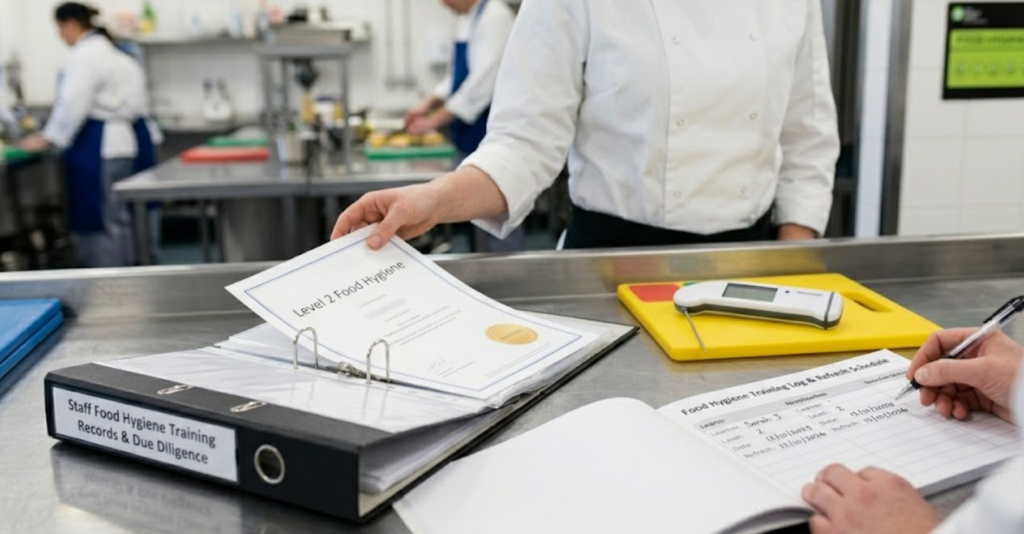
Passing the test is only half the job. Keeping proof ready is what protects you during inspections.
This final stage is where many businesses relax too soon.
What To Expect In The Assessment
Most online food hygiene certificate courses end with multiple-choice questions.
You complete the level that matches your work, meet the pass mark, and then receive a certificate. Some providers offer resits many times as necessary, which can reduce pressure for first-time learners.
This makes an online course a practical choice for people who want online training that fits around work.
What To Do Once You Pass
Once you pass, save the certificate, print a copy for the staff file, and record the date in your training log.
I also advise recording the learner’s name, job role, level completed, and planned refresh date. That small step shows clear control and supports compliant record keeping.
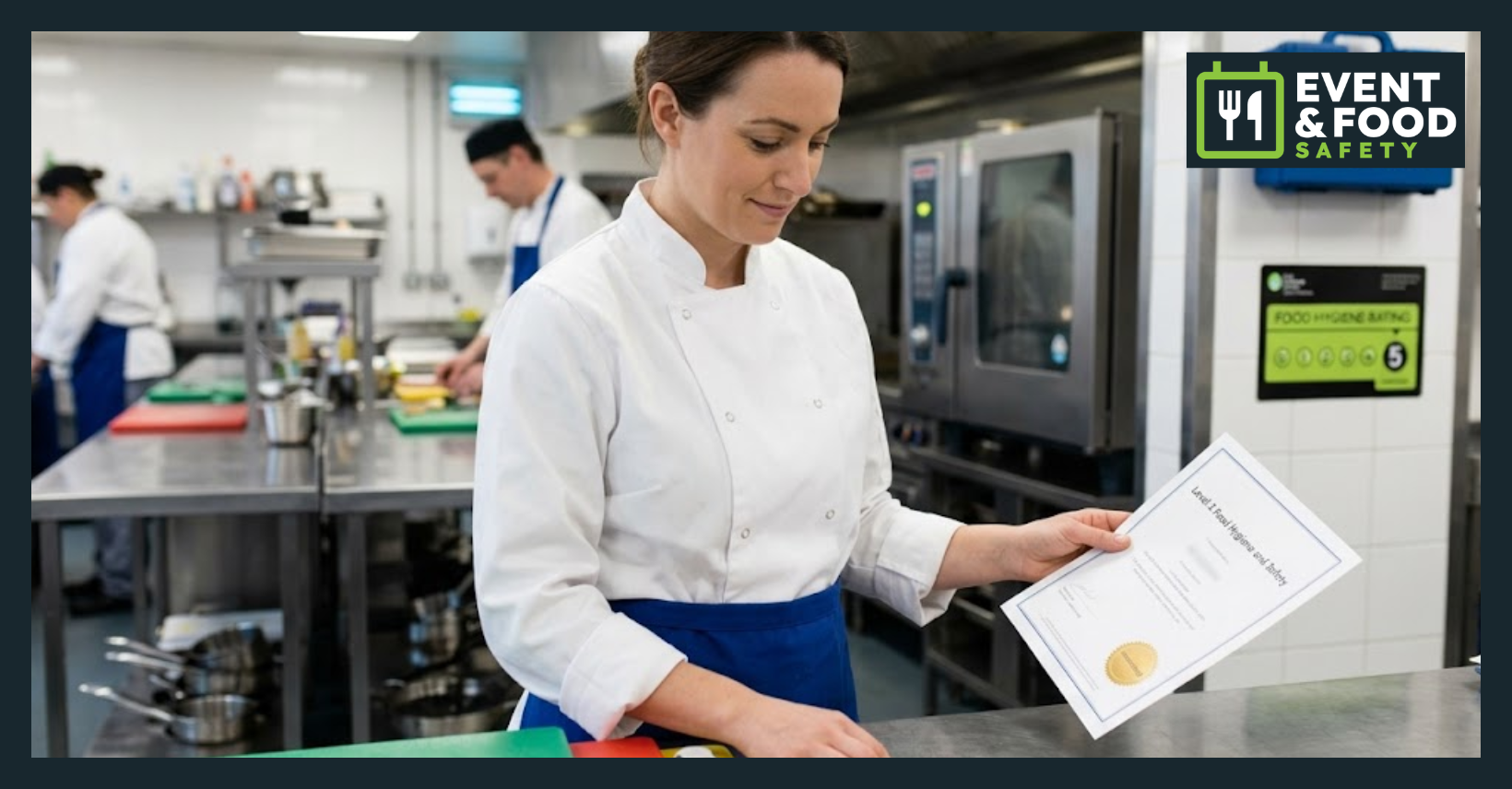
A level 2 food hygiene certificate or level 3 award should be easy to find when inspectors ask for evidence.
How Long Does A Certificate Last
There is no fixed national rule that says training every set number of months is required.
Still, many businesses refresh training every three years as part of best practices and continuing professional development. A note to refresh your training every three years can strengthen your CPD plan and show that your organisation takes food hygiene and safety course updates seriously.
Why Equipment Still Matters After Training
Training proves knowledge, but equipment proves action.
For food safety and hygiene in working kitchens, teams still need the right tools to ensure food is safe. Event & Food Safety supplies professional thermometers for different tasks, so you can match the tool to the risk instead of guessing. You can find competitive Thermapen ONE prices in the UK if you need high-speed accuracy.
A certificate proves knowledge. A thermometer proves action.
That mix supports due diligence, stronger food safety management, and safer service for anyone who works in the food industry.
Final Thought
A food hygiene certificate in the UK is best seen as proof of suitable training, not as a paper shield on its own.
Pick the right level, choose accredited food hygiene training, finish the assessment, and keep your records tight. That is the route I trust for caterer teams, catering staff, and venues that want to stay compliant and protect guests.