Thermometers
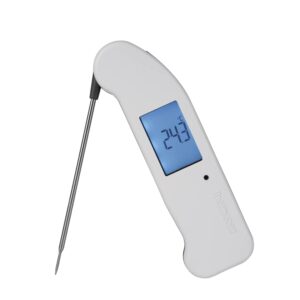
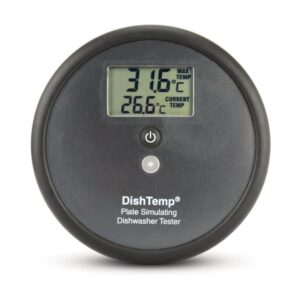
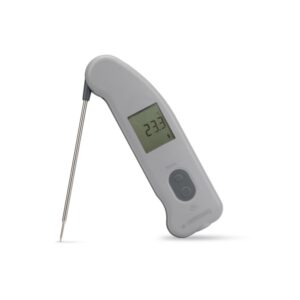
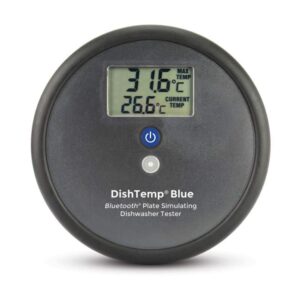
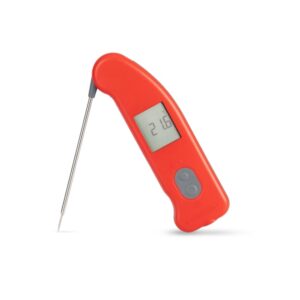
Food safety thermometers from ETI, a UK thermometer manufacturer, for accurate temperature monitoring in kitchens and on stands. Choose a digital probe thermometer such as the Thermapen ONE to check cooked food is safe at the core and hot holding is at 63°C or above, an infrared thermometer for quick surface checks, a fridge or freezer thermometer with a high and low alarm, or a dishwasher thermometer to check your final rinse. Some models are Bluetooth, so each temperature reading goes straight into an app for your HACCP records.
For most food stands at a trade show we recommend a probe thermometer and a fridge thermometer. Our guide to temperature control on a stand explains which checks to make and when.

Choosing a thermometer for your stand
Which thermometer you need depends on what you are checking: the middle of the food, a surface, or the air inside a fridge.
Probe thermometers
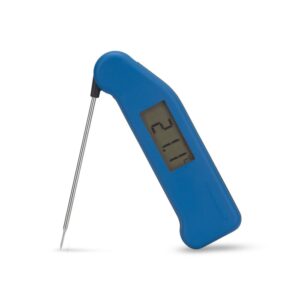
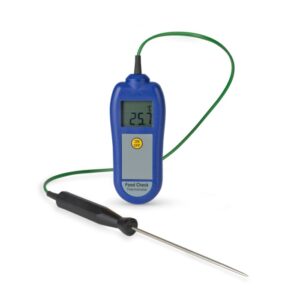
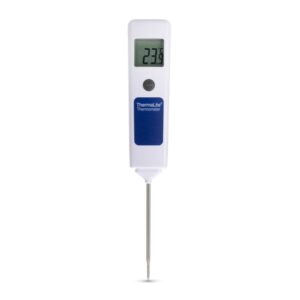
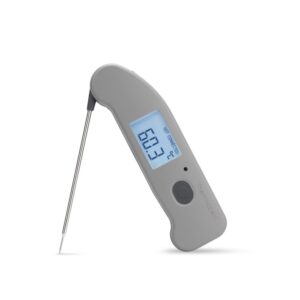
A probe thermometer such as the Thermapen ONE, Thermapen Classic or ThermaLite measures the temperature in the middle of the food. Use it to check cooked food has reached 75°C, that hot food on display is holding at 63°C or above and that chilled deliveries are at 8°C or below.
Infrared thermometers
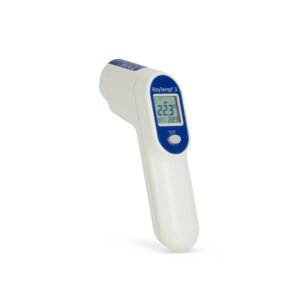
An infrared thermometer such as the RayTemp 3 reads the surface temperature without touching the food. It is quick for deliveries and fridge shelves, but it cannot read the core temperature, so use a probe for anything you cook, reheat or hot hold. The Thermapen IR does both, with an infrared sensor and a fold-out probe.
Fridge and freezer thermometers
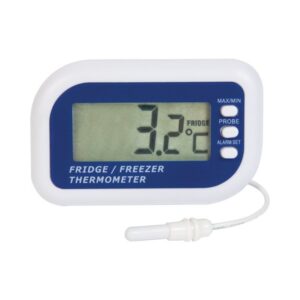
A fridge or freezer thermometer stays in the unit and shows you at a glance that the fridge is at 5°C or below, or the freezer at -18°C. An alarm model warns you if a door is left open.
Checking accuracy
Check your probe regularly in iced water (it should read between -1°C and 1°C) and in boiling water (99°C to 101°C). The Thermapen ONE comes with a traceable calibration certificate. If your organiser or auditor asks for a UKAS certificate, add UKAS calibration when you order.
For when to take each reading and how to record it, see chilled food, hot holding and probe checks on your stand.