Sampling is probably why you are at the show, and it is where most of the food safety issues we see on stands start. Hundreds of visitors, open food and a busy team is a lot to manage. This guide covers the rules that usually apply and a layout that keeps it simple.
Before the show
- Tell the organiser what you plan to sample, in writing and in good time. Most venues ask for the details at least 28 days before the event.
- Check you are registered as a food business with your local authority. Sampling counts as a food operation, even when it is free (FSA food business registration).
- Work out which risk category your sampling falls into, because that decides whether you need a hand-wash basin.
- Write a short food safety plan and an allergen matrix covering every sample, including accompaniments.
Sample sizes
Under the AEV eGuide, which most UK venues follow, samples must be free, the product must be a core part of your business, and sizes are limited (paragraphs 24 to 28):
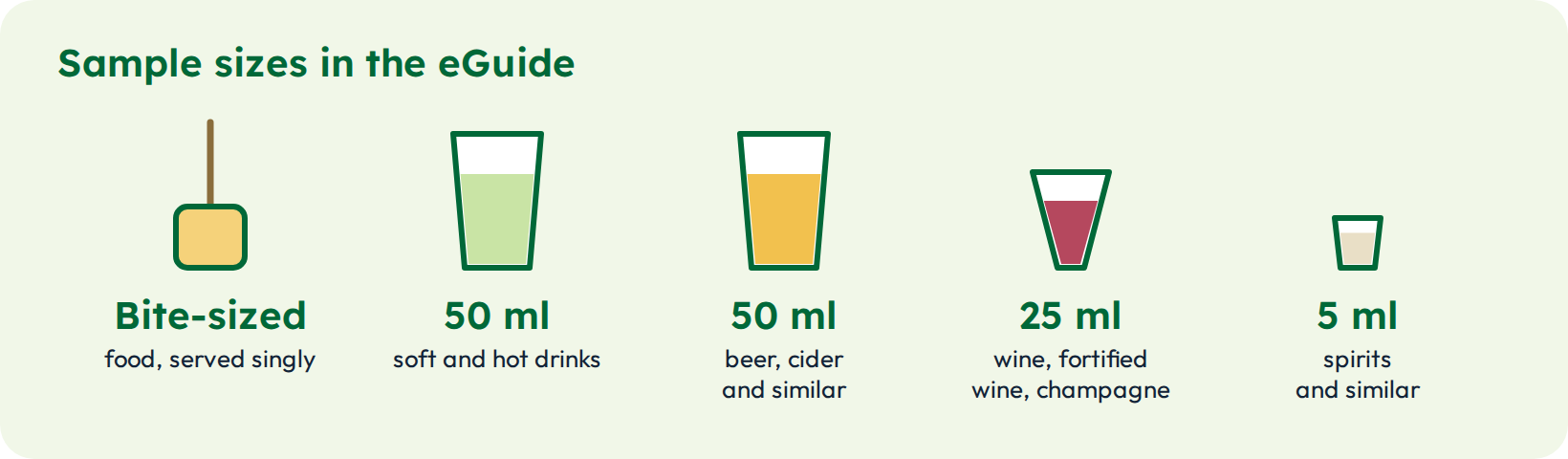
- Food: singly served, bite-sized portions, or individually wrapped items for visitors to take away.
- Soft and hot drinks: 50 ml. Beer, cider and similar: 50 ml. Wine, fortified wine, champagne and similar: 25 ml. Spirits: 5 ml.
- Larger samples need the venue’s agreement and a fee may apply. In Scotland, only one sample of any alcoholic drink per person.
- Hot drink samples in double-walled cups and drunk on the stand, or with secure lids.
Offering samples without cross-contamination
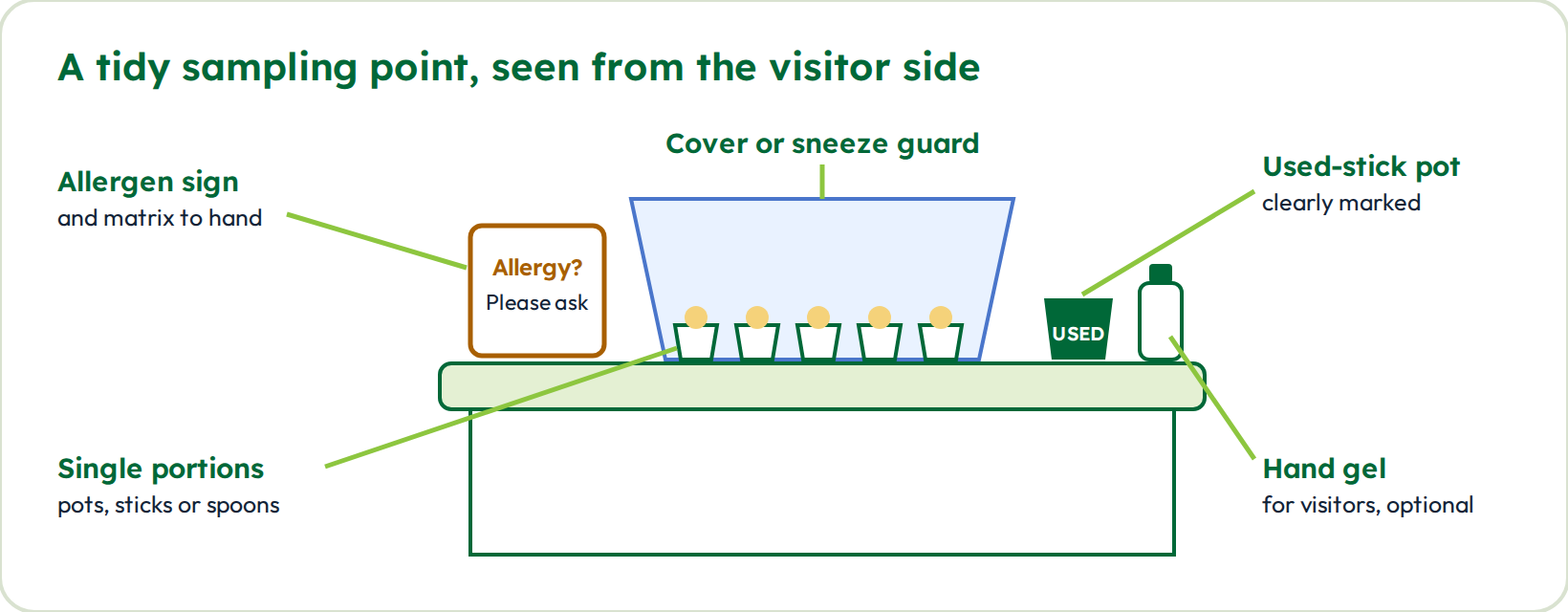
The eGuide asks you to think about these points in your risk assessment (paragraph 27). In practice:
- Single portions. Put each sample in its own pot, on a stick or a spoon, so visitors take one without touching the rest. Never offer samples from the blade of a knife.
- No double-dipping. For dips, sauces and spreads, put a portion on each cracker or spoon for the visitor, or use single-use spoons. Do not leave a shared bowl for breadsticks.
- No fingers in the food. Wrapped items can go in a bowl. Unwrapped food should not.
- Used cutlery kept apart. Use each stick or spoon once, and have a clearly marked pot for used sticks and spoons, kept apart from the clean ones.
- Clean before refilling. Do not top up a plate or bowl; swap it for a clean one.
- Cover the display. A sneeze guard or cover protects food from passing visitors. If the food is wrapped or out of reach, you may not need one.
- Somewhere for waste. Stones, skins and napkins need a bin, separate from the used cutlery pot.
Temperatures for samples
Chilled samples such as cheese, cooked meats and dairy desserts can be out of the fridge for one period of up to 4 hours while on display, then should be thrown away. Hot samples should be kept at 63°C or above, or used within 2 hours. Put out small amounts often and label each batch with the time. The temperature control guide has the detail, and a probe thermometer makes the checks easy.
People on the stand
- Anyone handling open food should wash their hands at the basin before starting and regularly through the day. Gel on its own is not enough for open food.
- Wear a clean apron, cover cuts with a blue waterproof dressing and avoid jewellery that could fall into food (eGuide paragraph 70).
- Nobody should handle open food within 48 hours of diarrhoea or vomiting.
- Give temporary and agency staff a short briefing on your plan, where the allergen matrix is, and what to do if a visitor asks a question they cannot answer.