
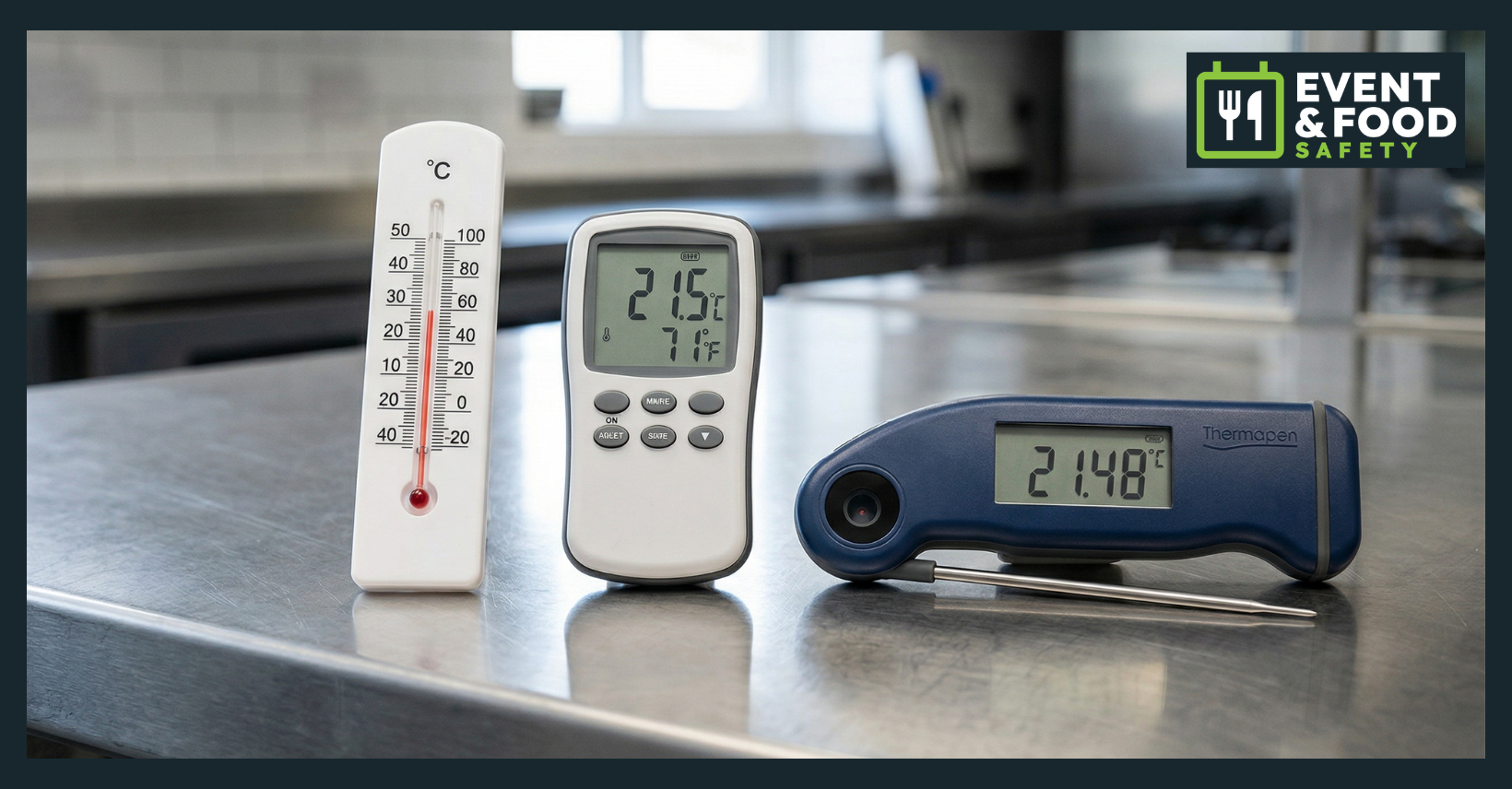
Finding a fair air thermometer price is essential when you want to measure air temperature for your kitchen, workplace, or event. Choosing the right room thermometer can feel confusing, especially with prices ranging from just a few pounds to well over £100.
I’ve spent years working with food businesses and event caterers, so I know what matters most when picking a temperature instrument, and what’s worth spending extra on, especially when the device is used to measure critical conditions.
Quick Answer
The price of an air thermometer in the UK ranges from £5 for basic analogue models to £120 or more for professional, digital, or probe-based instruments. Most small businesses and home users will find great options between £8 and £40, depending on their needs. Many of these units include a temperature probe and can display readings in both Celsius and Fahrenheit.
Typical Air Thermometer Price Range
When I first started buying temperature thermometers for our own shop, I noticed that this type of thermometer fits into three clear price bands where thermometers are used most:
- Entry-level air thermometers: £5-£15. These include simple analogue or wall thermometer models, good for checking ambient temperature in rooms or storage areas.
- Mid-range digital thermometer models: £15-£40. More accurate, often portable, and easy to read. These suit most food businesses, caterers, or anyone needing regular air temperature checks.
- Premium/professional air thermometers: £40-£120+. These often include probe sensors, advanced digital displays, or multi-function features for HVAC or laboratory environments. A versatile choice in this category is the Thermapen® IR Air, which combines high-accuracy air sensing with infrared surface measurements for a complete professional solution.
For most indoor and outdoor monitoring, you rarely need to spend more than £40 unless you have specialist requirements.
What Affects the Price of an Air Thermometer?
Why do some models cost so much more than others? I get this question all the time.
- Accuracy and calibration: Precise measurement costs more. Professional users need accurate readings, so expect to pay extra for a high-quality temperature sensor.
- Build quality: Stainless steel or waterproof designs last longer, which is crucial for busy kitchens, mobile catering, or refrigeration monitoring.
- Features: Digital displays, °C/°F switching, wireless connectivity, and data logging drive the price up.
- Probe or specialist capability: Food safety or HVAC applications often require a probe thermometer, which adds cost.
- Brand, warranty, and support: Trusted brands and longer warranties usually cost a bit more, but offer peace of mind.
The bottom line: You pay for reliability, durability, and accuracy. For everyday use, a mid-range option delivers the best value.
Air Thermometer Price in the UK
UK buyers have a few extra things to watch for when shopping for a home office, everyday life, or a variety of applications:
- All prices usually include VAT, but check the listing to be sure.
- Local suppliers offer better support, returns, and product info.
- Shipping: Some online marketplaces ship from abroad, which can delay delivery or affect warranty.
UK buyers should always check whether VAT is included, along with delivery times, warranty, and supplier support.
Here’s a quick comparison table for reference (all prices approximate, VAT included):
| Type | Typical Price (£) | Features/Uses |
| Analogue wall thermometer | 5-12 | Simple, reliable, no battery, indoor/outdoor |
| Mid-range digital thermometer | 15-40 | Accurate, easy-read display, portable |
| Probe-based air thermometer | 35-120+ | For food safety, HVAC, professional kitchens |
| Wireless digital thermometer | 25-100 | Remote monitoring, smart display, data logging |
| Specialist/Laboratory models | 60-200+ | High accuracy, calibration certificate |
What Is an Air Thermometer Used For?
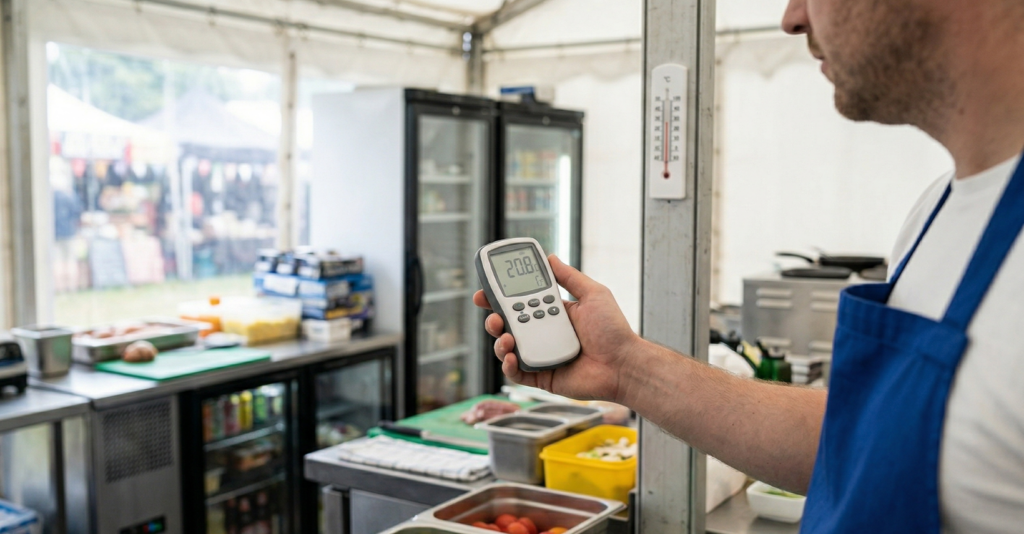
Air thermometers are used to monitor ambient temperature in kitchens, storage areas, catering environments, workplaces, and outdoor settings. They help users maintain safe, compliant, and consistent conditions across a wide range of applications.
Air Temperature Checks in Food Safety
In my shop, most customers use air thermometers to monitor food storage, kitchens, or chilled environments. Using a dedicated cooking thermometer for air ensures consistent temperature measurement, keeping food safe and compliant with regulations. It is vital to monitor the freezing point of equipment or the ice point for calibration.
A reliable air thermometer means you can spot problems before they become health risks. I’ve seen businesses get caught out by faulty gauges, so don’t risk it.
A reliable air thermometer helps you spot problems before they become food safety risks.
Air Thermometers for Events and Catering
If you run a mobile catering setup or serve food at events, you need something portable and robust to work quickly and accurately. Air thermometers with instant read capability are perfect for checking ambient temperature, chilled storage, or even tent environments.
Event catering is unpredictable, and having a portable, accurate instrument reduces stress.
For events and catering, portability and accuracy are essential.
Indoor vs Outdoor Air Temperature Monitoring
Some temperature thermometers work well both indoors and outdoors, but always check the product description for temperature and humidity ratings. Outdoor models need to be waterproof and durable for British weather. For most indoor air quality checks or ventilation monitoring, a basic wall thermometer or digital thermometer is fine.
Outdoor monitoring needs a more durable, weather-resistant model, while most indoor checks can be handled with a basic thermometer.
Types of Air Thermometers and Their Price Differences
Different types of air thermometers come at different price points because they vary in accuracy, convenience, durability, and specialist capability.
Basic Analog Air Thermometers
These are the budget option. No batteries, no fuss, just a classic temperature meter or gauge. Great for indoor or outdoor use, but less accurate. Expect to pay £5-£12.
Basic analogue thermometers are the cheapest option, but they are generally less accurate.
Digital Air Thermometers
Digital thermometer models are easier to read and generally more accurate. Many include an LCD display and can switch between °C and °F. Some advanced models use infrared technology (often called an IR sensor) for surface checks, while a thermal thermocouple might be used in more complex settings. Prices run from £15 to £40 for most everyday models.
Digital thermometers usually offer the best balance of readability, accuracy, and value for everyday use.
Wall-Mounted and Hanging Air Thermometers
Wall thermometer models are ideal for kitchens, storage rooms, fridges, and workplaces. Look for clear displays and build quality (stainless steel for durability).
Wall-mounted and hanging models are ideal when you need clear, fixed temperature monitoring in one place.
Probe-Based or Specialist Air Temperature Devices
These come with air probe attachments or specialist sensors for HVAC, laboratory, or commercial food applications. Probe-based and specialist devices are worth the higher cost when you need professional-grade accuracy or compliance; the Thermapen® IR Air is a standout here, featuring a 360° rotating display and antimicrobial protection that makes it ideal for rigorous environments.
Probe-based and specialist devices are worth the higher cost when you need professional-grade accuracy or compliance.
What Features Should You Look for Before Buying?
- Accuracy and temperature range: Get a thermometer that can measure your expected temperatures accurately. Food safety needs precise readings between -30°C and 50°C.
- Easy-to-read display: Digital thermometer models with large screens are best for busy environments.
- Durability and build quality: Stainless steel, waterproofing, or shock resistance are musts for heavy use.
- Calibration and compliance: Look for calibration certificates if you need dependable readings for audits.
- Mounting, portability, and ease of placement: Decide whether you need a wall thermometer, fridge model, or something portable.
Always check the battery type, warranty, and if the instrument is suitable for your workspace or environment, especially if you need to monitor air velocity, heating systems, or require ease of use with a built-in alarm.
Before buying, focus on accuracy, temperature range, durability, and whether the thermometer suits your environment.
How Much Should You Spend on an Air Thermometer?
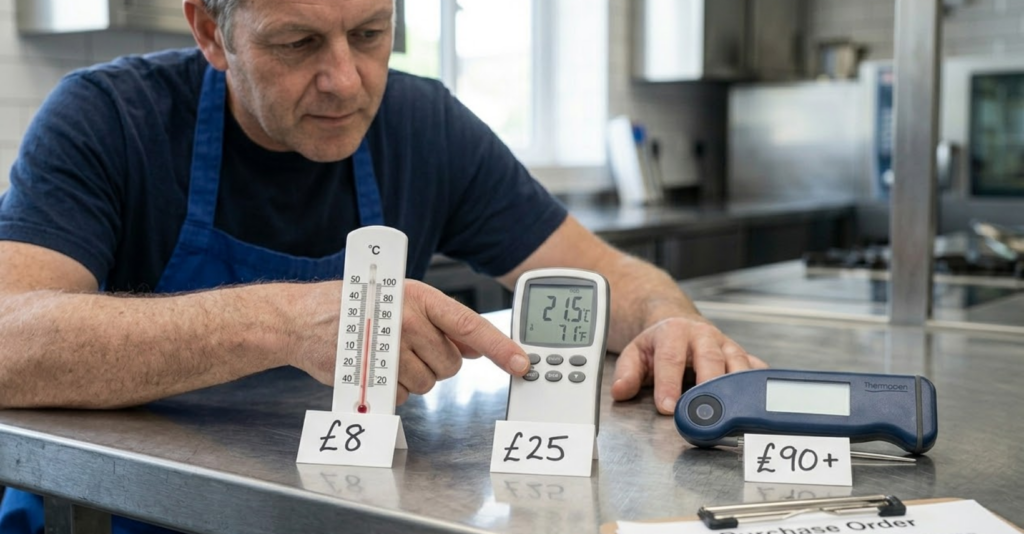
- Budget buyers: Choose a basic analogue or digital thermometer for simple checks, home kitchens, or occasional use.
- Mid-range options: Pick a versatile digital or wall thermometer with probe or data logging if you run a food business or training environment. These often feature adjustable settings for different environments.
- Premium models: Worth it for high-volume catering, commercial kitchens, or where accurate readings and reliability are non-negotiable.
I usually recommend starting with a mid-range model for both value and reliability.
For most buyers, a mid-range model offers the best combination of value, reliability, and performance.
Where Can You Buy an Air Thermometer?
- Food safety equipment suppliers (like our shop): Good for commercial buyers or those in healthcare. You’ll get expert advice and better after-sales support on your food thermometer.
- Online marketplaces: Convenient, but check reviews and warranty. Some sellers list products that aren’t suitable for UK use or lack proper VAT receipts.
- Specialist retailers: Offer more choice in probe thermometers, wireless models, or calibrated instruments.
Before you order, check delivery times, returns policy, warranty, and whether you get a calibration certificate if you need one. For more options, see our our shop.
Where you buy matters, especially if you need trustworthy support, warranty cover, or calibration documentation.
Air Thermometer Price vs Value
Buying the cheapest air thermometer often means replacing it sooner. It rarely pays off in the long run when you need to measure temperature reliably.
- Cheapest option: Good for simple, infrequent checks.
- Most reliable option: Saves money over time through accurate, dependable readings and fewer replacements.
For food businesses, events, or busy kitchens, a mid-range or premium instrument offers the best value.
The cheapest air thermometer is not always the best value if it needs replacing sooner or gives unreliable readings.
Common Questions About Air Thermometer Prices
Many buyers want to know whether paying more actually leads to better performance, and in many cases, it does.
Are digital air thermometers more expensive than analogue?
Usually, yes. A digital thermometer costs more, but you get better accuracy and a high-contrast object and display area.
Is a more expensive air thermometer more accurate?
Higher-priced models generally have better sensors and calibration, so you can trust the readings.
Do I need a specialist air thermometer for food safety?
For professional kitchens or HACCP compliance, yes. Look for probe-based or calibrated models.
Can I use the same air thermometer for kitchens and storage areas?
Yes, if it’s suitable for both ambient and chilled environments. Check the temperature range and if it can monitor humidity levels as well.
Final Thoughts on Choosing the Right Air Thermometer
If you’re on a budget, a basic analogue or digital model works for most indoor checks.
For food businesses and caterers, choose a mid-range or probe-based thermometer. You’ll get accurate readings and durability for busy environments.
If you want long-term value or need specialist features, invest in a premium model. I often suggest the Thermapen® IR Air for its dual-functionality and included calibration certificate, ensuring you have a professional-grade instrument for every check.
Curious about the right instrument for your needs? Browse our shop or explore our food safety training courses for more advice on using temperature thermometers in real-world settings.
Key takeaway: spend a little more for reliability, accuracy, and peace of mind. The right air thermometer price is an investment in safety and confidence, whether at home, on the road, or in a professional kitchen.