
Can you spot all the 14 food allergens before they reach your guests’ plates? If you manage a food business, especially within events or catering, knowing every major allergen, and their sneaky hiding spots, is not just best practice, it is a legal requirement. I’ve seen, time and again, how one missed label or hidden sauce can put guests at risk and leave teams scrambling.
Quick Answer: The 14 Food Allergens at a Glance
Here’s a table you can print, share, or stick up in your kitchen. Trust me, event teams love this for its speed and clarity.
| Allergen | Examples | Look out for… |
|---|---|---|
| Celery | Stock cubes, soup, salads | Celery salt, bouillon, celeriac |
| Cereals containing gluten | Wheat, rye, barley, oats | Found in bread, pastry, pasta, cakes |
| Crustaceans | Prawn, scampi, lobster | Fish sauces, shellfish in soups |
| Eggs | Mayonnaise, cakes, pasta | Glazes, salad dressings |
| Fish | Fish sauces, fish stews | Relish, oyster sauce |
| Lupin | Lupin flour, pastries | Found in bread, cakes |
| Milk | Cheese, butter, yoghurt | Desserts, sauces, milk powder |
| Molluscs | Mussel, squid, oysters | Scampi, fish stews |
| Mustard | Sauces, salad dressings | Mustard flour, powder in soups |
| Tree nuts | Almond, hazelnut, walnut | Pastries, biscuits, desserts |
| Peanuts | Peanut butter, sauces | Cakes, snacks, found in bread |
| Sesame | Buns, crackers, hummus | Breadsticks, sesame oil |
| Soya | Soya flour, soya protein | Bread improvers, soya lecithin |
| Sulphites | Dried fruit, wine, soft drinks | Pickles, relishes, salad bars |
Every food business must display clear allergen information. It’s not just a box-ticking exercise, it’s your shield against costly allergic reactions and legal trouble.
Why the 14 Major Food Allergens Matter for Food Businesses
Ignoring a food allergen can lead to disaster. Developing a comprehensive food safety management system ensures that risks are mitigated before they reach the table. One slip in your label or kitchen process risks a guest’s life. The Food Standards Agency requires all food businesses to declare the 14 major food allergens when they’re present, whether in a restaurant, food truck, or pop-up event.
I’ve seen first-hand how food allergies can turn a celebration into an emergency. One of the most common mistakes? Hidden ingredients. Sauces and soups often contain allergens you wouldn’t expect.
- Always check your labels, especially on pre-packaged food and sauces.
- Many sauces and relishes sneak in mustard, sesame, or soya.
For those running events, our Highfield-accredited training covers everything from allergen management to food information regulation. We give your team the tools to keep guests safe and compliant. Understanding how you can get a food hygiene certificate in the UK is a vital part of this process. I’ve seen first-hand how food allergies can turn a celebration into an emergency.
The Full List: 14 Food Allergens and Their Hidden Sources
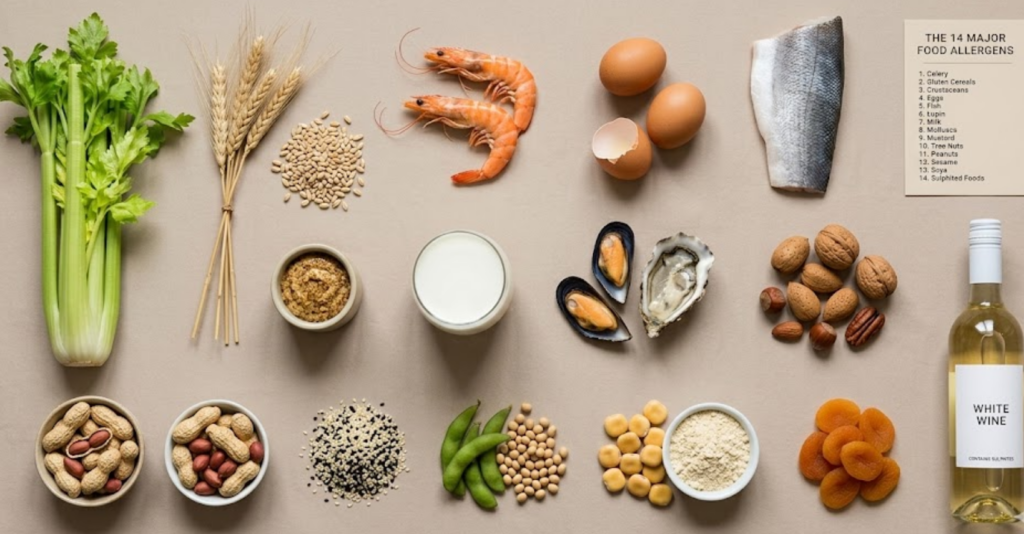
Let’s break down each allergen, including the “look out for” spots you might miss:
1. Celery (and Celeriac)
- Look out for celery salt, celeriac, stock cubes, and soups.
- Celery allergies are on the rise, with celery often hiding in processed foods.
2. Cereals Containing Gluten (Wheat, Rye, Barley, Oats)
- Includes wheat, rye, barley, and oats, the “Big 4.”
- Found in bread, pasta, pastry, cakes, and foods containing flour.
3. Crustacean
- Includes prawn, scampi, and lobster.
- Often found in fish sauces, shellfish soups, and meat products.
4. Egg
- Egg allergy is common in children in the UK.
- Watch for eggs in mayonnaise, pasta, cakes, and salad dressings.
5. Fish
- Fish allergy can be severe. Watch for fish sauces and oyster sauce.
- Fish stews, relish, sauces, and even some meat products can contain fish.
6. Lupin
- Lupin flour is used in bread, cakes, and pastries.
- Rare in the UK but common in imported baked goods.
7. Milk
- Milk allergy can cause serious issues. Always check desserts, sauces, and cheese.
- Milk powder often sneaks into cake and pastry mixes.
8. Mollusc (Mussels, Squid, Oysters)
- Includes mussels, squid, and oysters.
- Mollusc allergies often overlap with shellfish allergies.
9. Mustard
- Mustard is a major allergen and common in salad dressing, sauces, soups, and stock cubes.
10. Tree Nut (Almond, Hazelnut, Walnut)
- Tree nuts are found in cake, biscuit, dessert, and some meat products.
11. Peanut
- One of the most common severe food allergies.
- Peanuts show up in sauces, cakes, found in bread, and snacks.
12. Sesame
- Sesame allergy is rising. Watch for sesame in buns, hummus, and sesame oil.
13. Soya
- Soya protein, soya flour, and soya lecithin are found in bread, sauces, and desserts.
- Soya is a legume, like peanuts.
14. Sulphites
- Sulphites are used in dried fruit, wine and beer, soft drinks, relishes, and salad bars.
Allergen Control: Safety Tips and Professional Tools
Allergens must be managed at every stage of food preparation. I recommend:
- Double-checking all labels for every ingredient.
- Keeping allergen information visible in prep and service areas.
- Using colour-coded, UKAS-certified thermometers and temperature monitoring probes. Browse our professional shop for the right equipment, for example, our infrared probe is ideal for checking surface temperatures on allergen-free prep stations.
Want a deeper dive? We’ve covered allergen control in event catering. Read our expert guides for more tips.
Essential Compliance: What Food Businesses Must Do
Every food business must:
- Provide clear, accurate allergen information on all food labels and menus.
- Train staff on the 14 major food allergens and how to prevent cross-contamination.
- Keep allergen information up to date and visible for all staff and customers.
Failing to comply with the Food Information Regulation can lead to fines and, most importantly, put lives at risk. For a safer, more confident kitchen, book our accredited training or contact us for a compliance audit.
Food safety is never “one and done.” Stay vigilant. Review your processes, train your team, and use the best equipment. If you need support, we’re here to help you keep every guest safe, every time.