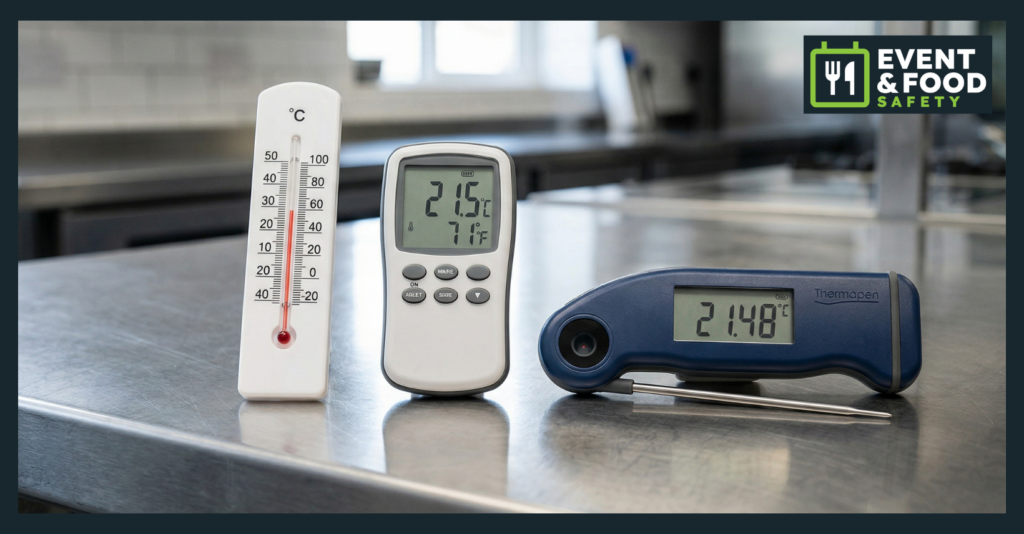
Finding a fair air thermometer price is simple once you know what you need to measure. Prices run from a few pounds for a basic room thermometer to well over £100 for a professional digital thermometer, and the right choice depends on whether you are checking a room, a fridge or a chilled display.
We sell thermometers to food businesses, caterers and food exhibitors, so this guide focuses on what is worth paying for when the reading matters for food safety.
Quick Answer
An air thermometer in the UK costs from about £5 for a basic analogue room thermometer to £100 or more for a professional digital meter with an air probe and calibration certificate.
Most small food businesses spend between £10 and £60. A digital fridge or freezer thermometer covers chilled storage for around £10 to £15 excluding VAT, a fridge alarm thermometer with a UKAS calibration certificate is around £50, and a professional air and surface thermometer such as the Thermapen IR Air is about £100. Prices quoted from our shop are excluding VAT, at the time of writing in October 2026.
Typical Air Thermometer Price Range
Here is what each type of thermometer usually costs and what you get for the money.
Air thermometers fall into three clear price bands:
- Entry-level air thermometers, about £5 to £15. Simple analogue or digital wall thermometer models, good for checking ambient temperature in rooms and storage areas.
- Mid-range digital thermometer models, about £10 to £60. More accurate and easier to read. Our digital fridge or freezer thermometer shows the temperature inside a fridge from outside the door, and the fridge alarm thermometer adds an audible alarm, max/min readings and a UKAS calibration certificate.
- Premium or professional thermometers, £60 to £120 and above. These include air probes, thermal imaging or infrared readings, stainless steel tips and calibration certificates for audits. The Thermapen IR Air combines a fast-response air probe with an infrared surface thermometer in one tool.
For most indoor monitoring you rarely need to spend more than £60 unless you have specialist requirements.
What Affects the Price of an Air Thermometer?
- Accuracy and calibration. Precise measurement costs more. A traceable or UKAS calibration certificate adds cost but gives you proof for audits.
- Build quality. Water-resistant sensors and tough cases last longer in busy kitchens and cold rooms.
- Features. Digital displays, °C/°F switching, max/min memory, alarms, wireless connectivity and data logging all push the price up.
- Probe or infrared capability. An air or surface sensor lets one tool check several places quickly.
- Brand, warranty and support. Trusted brands of temperature thermometers with UK support usually cost a bit more but last longer.
The bottom line is that you pay for reliability, durability and accuracy. Choose the thermometer that is suitable for the job. For everyday use, a mid-range option gives the best value.
Air Thermometer Price in the UK
Buying in the UK, you have a few extra things to check:
- VAT. Some sellers show prices including VAT, others (including us) show prices excluding VAT for business buyers. Compare like with like.
- Supplier support. UK suppliers make returns, warranty claims and calibration easier.
- Shipping. Some marketplace sellers ship from abroad, which can delay delivery and complicate warranty claims.
| Type | Typical price | Features and uses |
|---|---|---|
| Analogue wall thermometer | £5 to £12 | Simple, no battery, room checks |
| Digital fridge or freezer thermometer | £10 to £15 | Remote probe, reads inside the fridge |
| Fridge alarm thermometer | £40 to £60 | Alarm, max/min, often with calibration certificate |
| Wireless digital thermometer | £25 to £100 | Remote monitoring, data logging |
| Professional air and surface thermometer | £90 to £150+ | Air probe plus infrared, calibration certificate |
What Is an Air Thermometer Used For?
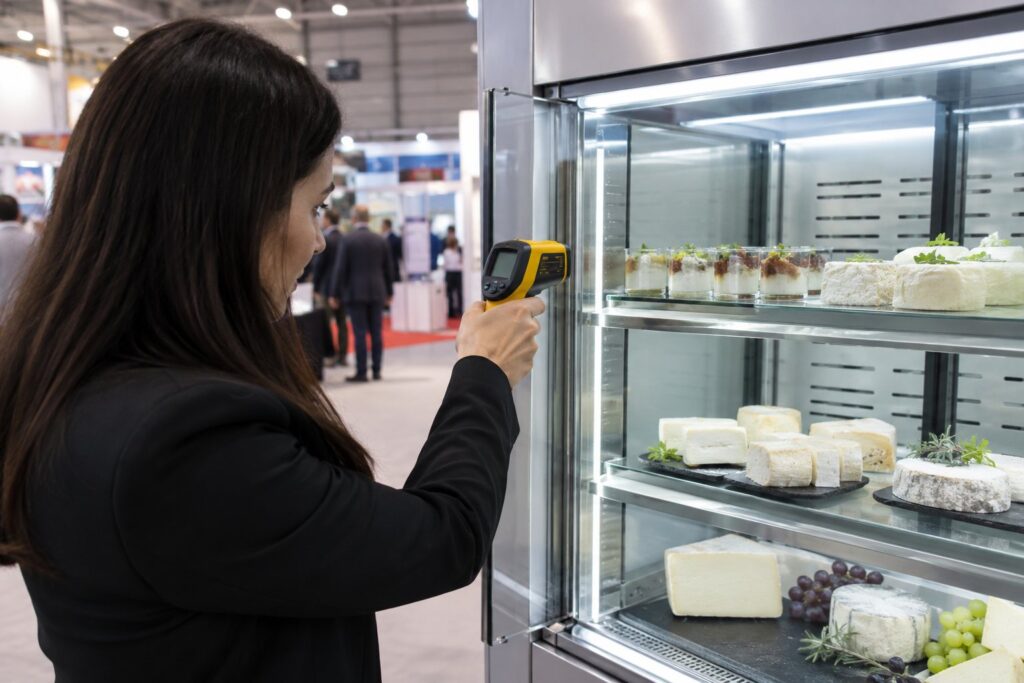
Air thermometers are used to monitor and measure air temperature in kitchens, storage areas, cold rooms, fridges, display cabinets and workplaces. They help you keep the environment safe and consistent and give accurate readings you can record.
Air Temperature Checks in Food Safety
Most of our customers use air thermometers to monitor food storage. Chilled food must be kept at 8°C or below by law in England, Wales and Northern Ireland, and we recommend running fridges at 5°C or below. An air reading tells you whether the fridge is working; a food thermometer reading of the food itself tells you whether the food is safe. A good routine uses both. Freezers should read -18°C or colder.
A reliable air thermometer means you spot a failing fridge before it becomes a food safety problem. Cheap dial thermometers that drift out of calibration are a common cause of false confidence.
Air Thermometers for Events and Exhibition Stands
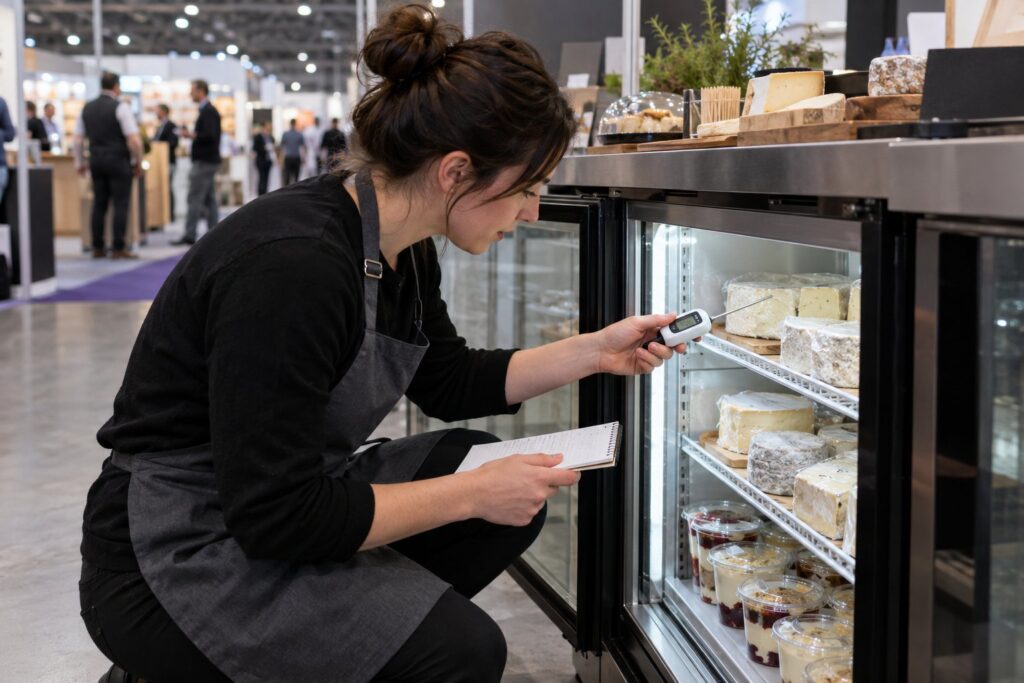
If you serve or sample food at trade shows, you need something portable and accurate for display fridges and chilled counters that are opened all day. An instant-read air or surface reading on each fridge at opening and during the day, written down, is what organisers and environmental health officers expect to see. Our guide to temperature control on stands covers the checks in full.
Air Quality and Ventilation
Some customers use air thermometers for indoor air quality, heating and ventilation checks. For a room or office, a basic digital thermometer and hygrometer (temperature and humidity) is usually enough. If you also need to measure the air in a loading bay or delivery area, check the model is rated for indoor and outdoor use. HVAC engineers use meters that also measure air velocity.
How Do You Measure Air Temperature Accurately?
Every air thermometer works the same basic way: a temperature sensor reacts to the air around it and the display turns that into a number. Cheaper models use a simple thermistor, professional meters often use a thermocouple, and both are fine as long as the reading is accurate where you need it. What changes the result is usually how you take the reading, not the price.
To measure air temperature in a room or a fridge properly:
- Give it time to settle. Air changes temperature more slowly than food, so leave the thermometer in place for a few minutes before you read it.
- Put it in the right spot. Away from doors, lights, heaters and direct sun. In a fridge, the middle shelf gives a fairer picture than the door.
- Do not read it straight after opening the door. On a busy stand a display fridge can read several degrees warmer for a minute or two after a restock. Read it, wait, then read again.
- Check the food as well. Air temperature measurement tells you how the fridge is working. A probe in the food tells you whether the food is safe.
If you want to see what happened overnight or across a show day, a digital max min thermometer or a small data logger records the highest and lowest temperatures for you.
Types of Air Thermometers and Their Price Differences
Basic Analogue Air Thermometers
The budget option. No batteries, just a classic gauge. Fine for a room, but less accurate and harder to read quickly. Expect to pay £5 to £12.
Digital Air Thermometers
Digital thermometer models are easier to read and generally more accurate, and give an instant read without guessing where a needle sits. Many have an LCD display and switch between Celsius and Fahrenheit. A digital max/min thermometer records the highest and lowest temperature since it was reset, which is useful for fridges overnight. Prices run from about £10 to £40.
Fridge and Freezer Thermometers
A fridge thermometer with a remote probe on a cable lets you read the inside temperature without opening the door. The 810-225 digital fridge or freezer thermometer and 810-210 are simple, low-cost options.
Probe-Based and Infrared Instruments
These come with air attachments or non-contact sensors for commercial food, heating and ventilation, or laboratory use. Thermometers with a stainless steel tip suit food; non-contact models suit surfaces. They are worth the higher cost when you need professional-grade accuracy or records for compliance. The RayTemp 3 gives touch-free infrared surface readings, and the Thermapen IR Air adds a dedicated air probe.
Air Thermometers vs Other Temperature Measurement Tools
It is easy to buy the wrong tool, because thermometers look alike but are built for different jobs:
- Air thermometers read the temperature of the air in a room, fridge, freezer or cold room. The sensor is designed to react to air, not to touch anything.
- Food or cooking thermometers (sometimes called meat thermometers or penetration thermometers) have a pointed probe that goes into the centre of the food. That is the reading that tells you whether food is cooked, chilled or hot held safely.
- Surface thermometers use a non-contact sensor to read the outside of a pack or a hot plate in a second, which is handy for quick checks but does not tell you the core temperature.
- Water temperature thermometers are made to sit in liquid, such as a dishwasher or sink, and some are sealed for that.
- Medical thermometers used in healthcare read body temperature and are not designed for food or rooms.
For a food business the usual kit is an air thermometer in every fridge and freezer plus one food thermometer for checking the food itself.
What Features Should You Look for Before Buying?
- Accuracy and temperature range. Make sure the thermometer covers the temperatures you need to measure accurately, from freezer to room temperature.
- Easy-to-read display. A large screen helps in busy environments.
- Durability. Water resistance and shock resistance matter for heavy use.
- Calibration. Look for a traceable or UKAS certificate if you need dependable readings for audits, or add a UKAS calibration to an existing instrument.
- Mounting and portability. Decide whether you need a wall thermometer, a fridge model or a portable meter.
- Battery and alarm. Check the battery type and life, and whether an alarm would help.
How Much Should You Spend on an Air Thermometer?
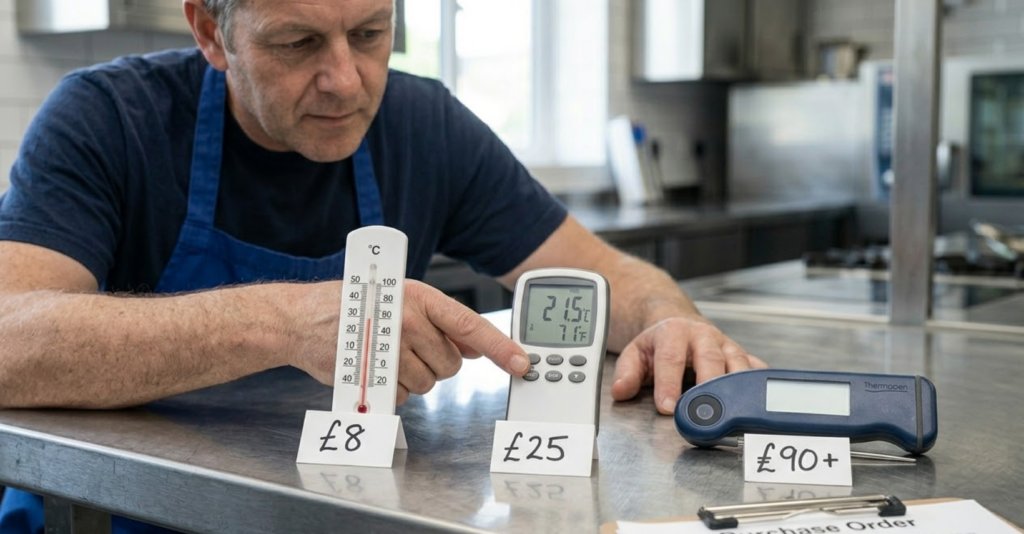
- Budget buyers: a basic analogue or digital thermometer for simple checks or occasional use.
- Food businesses: a digital fridge thermometer for each fridge and freezer, plus one good probe thermometer for food.
- Professional kitchens and exhibitors: a fridge alarm thermometer with a calibration certificate, and an infrared or air thermometer for fast checks across several units.
We usually recommend starting with a mid-range model for value and reliability.
Where Can You Buy an Air Thermometer?
- Food safety equipment suppliers, such as our thermometer shop. Good if you buy for a business and want UK support, calibration options and VAT receipts.
- Online marketplaces. Convenient, but check reviews, warranty and where the product ships from.
- Specialist retailers. More choice in calibrated and wireless instruments.
Before you order, check delivery times, returns, warranty and whether a calibration certificate is included.
Air Thermometer FAQs
How long will a digital thermometer last?
A good digital thermometer should last for years if you look after it. The battery is the part you replace most often, usually once a year or so depending on use. Cheap units tend to fail at the display or the cable, which is why a decent warranty is worth having.
What does calibrating a thermometer mean?
Calibrating means checking the reading against a known reference. The simple check you can do yourself is the ice point test: in a cup of crushed ice and a little cold water the reading should be close to 0°C, the freezing point of water. For audit records, a calibration certificate from a lab shows the result at set points.
Which type of thermometer is best to use at home?
For a room, a basic digital thermometer is plenty. For your fridge at home, a fridge thermometer that stays inside so you can check it each time you open the door. You only need a professional meter if you run a food business or need records.
Can I check room temperature on my phone?
Most phones do not have a sensor that measures the air around you, so apps usually show the weather for your area rather than the room you are in. If you need a real reading, use a thermometer.
Can I use one in a greenhouse or home office?
Yes. A digital max min greenhouse thermometer is a cheap way to see how hot and cold a greenhouse gets, and a basic room model is fine in a home office. Neither needs a calibration certificate, which adds to the cost of professional models.
Is a dial temperature gauge good enough?
For a room, yes. For refrigeration, a digital model is easier to read quickly and accurately, and many have an adjustable alarm that tells you when a fridge drifts out of range.
Do I need data loggers?
Only if you want a record without writing it down. Data loggers are used to measure and store readings every few minutes, which helps if a fridge runs overnight or across a long show day. For most small businesses, a written check at opening and during the day is enough.
Air Thermometer Price vs Value
Buying the cheapest air thermometer often means replacing it sooner, or trusting a reading that is wrong. For food businesses, events and busy kitchens, a mid-range or professional thermometer offers the best value over time. If you are building a temperature routine from scratch, our guide on how often EHOs visit explains what officers expect to see in your records.