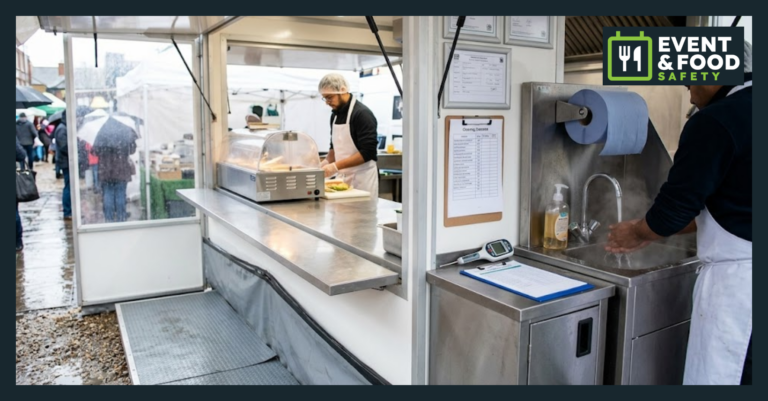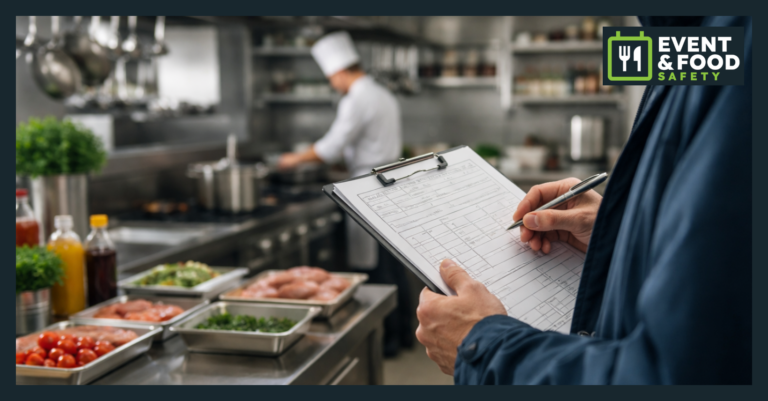
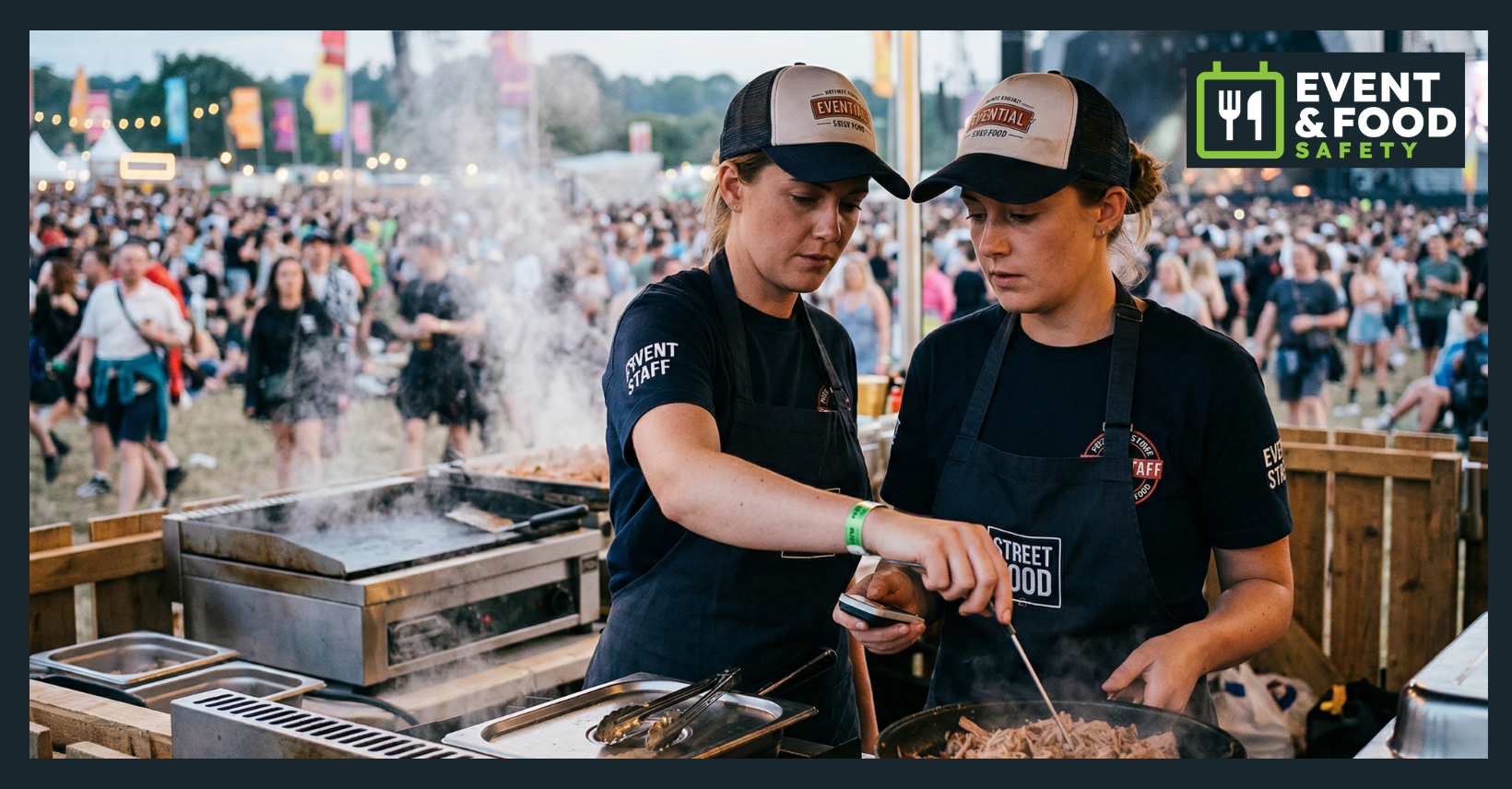
A packed crowd can feel electric. The food offer should add to that feeling, not put it at risk.
We have seen brilliant events lose control when food hygiene slips for even a moment. One missed hand wash, one probe left unclean, or one hot dish held at the wrong temperature can turn a smooth day into an emergency. That is why we treat food hygiene as a core part of event safety, not a side note.
Quick Answer
Food hygiene is vital to event safety training because unsafe food can harm guests, damage your reputation, and trigger legal trouble faster than almost any other failure on site. In the UK, food business operators must make sure food handlers get suitable food hygiene supervision and training, while event organisers must plan, manage, and control risks to people’s health and safety.
Food Hygiene is Event Safety, Not a Separate Task
When food is served at an event, food hygiene becomes part of the whole safety picture. A crowd can cope with a delayed set time. It cannot shrug off food poisoning.
At a busy event, pressure builds fast. Queues grow. Staff change stations. Deliveries arrive late. Waste piles up. That is when weak habits show up.
We teach teams to treat food hygiene as part of event safety management, not as a stand-alone kitchen rulebook. A good manager needs one joined-up management plan that covers food handling, staff briefings, first aid escalation, emergency contacts, cleaning, waste, and clear responsibility across the venue. That is how a safe event stays under control.
Food risk also connects with wider event management issues. Think crowd management around food queues, slip hazards from spills, fire safety near cooking kit, gas safety, and access for emergency response. One weak point can pull others down with it.
Why Training Matters When Pressure Hits
Training matters most when the site gets loud, hot, rushed, and messy. That is the real test.
Anyone can nod along to a policy in a calm room. A training course earns its value when staff face a rush of delegates, a broken fridge, or a last-minute menu change. That is when knowledge and skills must turn into action.
In our work, the strongest safety training does three things:
- shows staff the hazard, not just the rule
- builds habits through practice and supervision
- fits the event-specific risks of the site, menu, and audience
That is why we offer Highfield-accredited Level 2 and Level 3 food safety training, online, plus bespoke food safety training built around your operation. Our training courses page sets out the split clearly: Level 2 for food handlers, Level 3 for supervisory roles, and tailored group delivery for teams that need in-house support.
The Risks Event Professionals Cannot Ignore
Food hygiene failures move fast, and the damage spreads far beyond the kitchen.
The first risk is health. Poor hand hygiene, weak separation of raw and ready-to-eat food, poor chilling, or bad reheating can expose guests and staff to illness.
The second risk is operational. A suspected contamination issue can force service stops, stock disposal, supplier checks, and urgent assessment of who ate what and when. That can swallow your whole programme.
The third risk is legal and reputational. Local authorities expect suitable training and supervision. Event organisers also hold duties to protect workers, contractors, and attendees from risks to health and safety.
We have found that many event planners focus on visible threats first. They plan barriers, radios, and evacuation routes. Those matter. Yet unsafe catering can undo months of event planning in a single service period.
That is why food hygiene belongs in every training course tied to event safety training, especially for festivals, pop-ups, weddings, public event catering, and larger events with temporary kitchens.
What Good Event Safety Training Should Cover
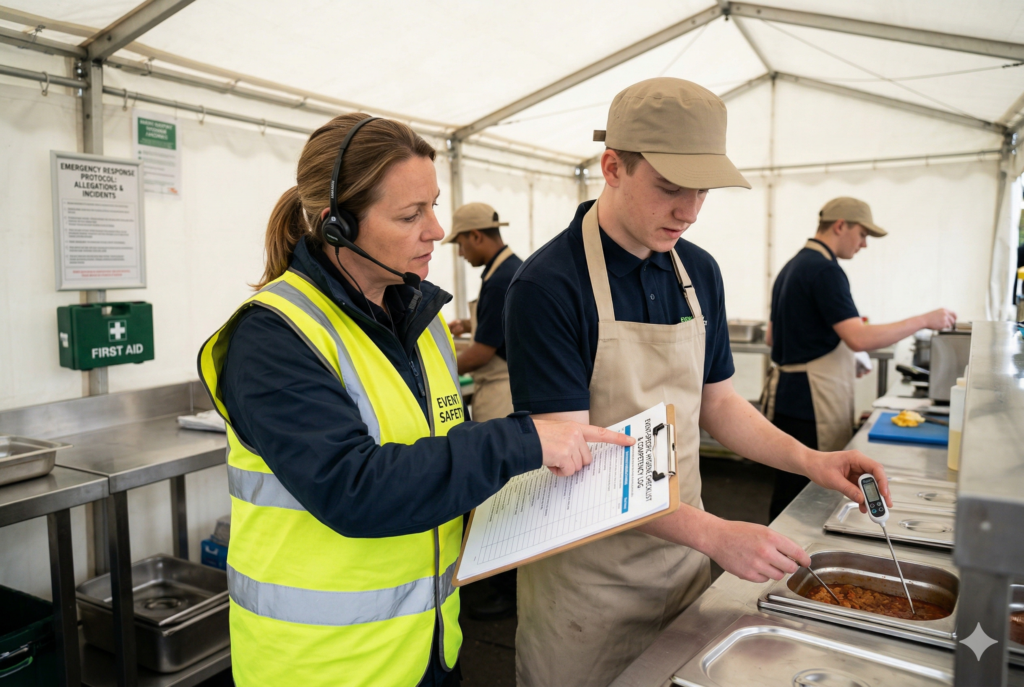
A strong course gives staff clear actions they can follow under pressure. That matters more than long theory.
We build training around the moments where people make mistakes. In practice, that means covering:
Supervision, Roles, And Competency
People need clear roles, and managers need proof that staff are competent. Supervision cannot be vague.
Staff should be trained in the safe methods that matter for their job and checked to make sure they follow them.
Temperature Control
Temperature checks protect food, and they protect your team from guesswork.
For live catering, we like matching the tool to the task. The FoodCheck Thermometer & Probe is ideal for caterers and food safety professionals who need dependable daily checks. Thermapen One gives one-second readings with strong accuracy and a traceable calibration certificate, which suits fast service work. For quick surface scans before a probe check, Thermapen IR combines infrared and penetration readings in one unit.
Site-Specific Hygiene Controls
Event-specific training beats generic slides every time.
Our bespoke food safety training approach explains why tailored content matters. We review HACCP controls, real workflows, and the actual workplace before we tailor the session. That approach fits mobile caterers, hospitality teams, and venue crews far better than one-size-fits-all teaching.
Emergency Response
Teams need to know what happens after the mistake, not just before it.
That includes who to tell, what stock to isolate, how to record an accident or complaint, when first aid enters the picture, and how the organiser escalates an emergency. Food hygiene and emergency planning must meet in one place.
Choosing The Right Course For Your Team
The right training course depends on who handles food, who supervises, and how complex the operation feels.
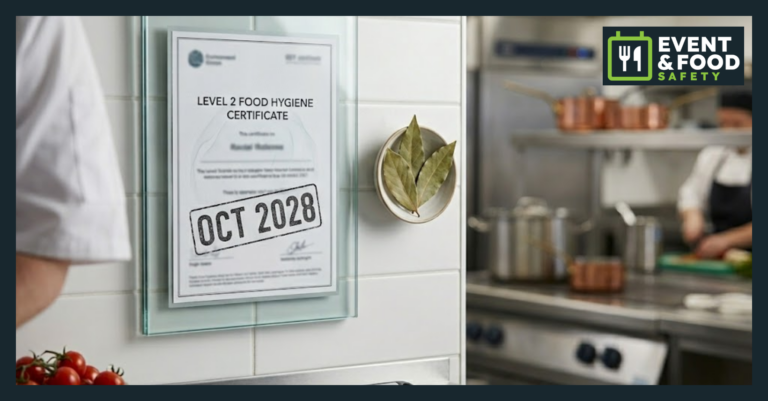
For front-line food handlers, our Level 2 Food Hygiene & Safety for Catering course works as a strong foundation. It is built for anyone handling, preparing, or serving food, with online access and digital certification on completion.
For supervisors and managers, Level 3 Food Hygiene & Safety training goes further. It is designed for supervisory and management roles, with broader coverage of food safety management and HACCP principles.
For mixed teams, we recommend tailored training. This allows you more room to cover organisational risks, venue layout, service flow, briefings, and the real event pressures that generic e-learning cannot always reach. You can learn more in our article on where to get bespoke food safety training, which explains the options available for teams that need training adapted to their operation.
One point matters here. In UK law, staff do not have to hold a food hygiene certificate to prepare or sell food, but food business operators must make sure they receive suitable supervision and training. A recognised certificate still gives a practical way to show learning, structure your programme, and support inspections.
Building A Safer Event Starts Before Opening Time
The safest events win before the gates open.
We believe the best event professionals train before the rush, test their systems, and keep the right equipment close to hand. That means a clear management plan, fresh risk assessments, trained supervision, and tools that support checks instead of slowing them down.
It also means using the right partner. Event & Food Safety offers food safety consultancy, venue audits, regulatory guidance, accredited food hygiene training courses, and a shop stocked with professional thermometers and monitoring tools for catering operations.
Our view is simple. Food hygiene is not a background task. It is one of the clearest signs that an organiser takes guest welfare, legal responsibilities, and operational control with care.
If you want a successful and safe event, start with food hygiene and build your safety training around real conditions, real people, and real decisions.