Food safety and hygiene are the backbone of every catering business, venue kitchen and food exhibitor. If you are looking for tailored food safety training that fits how your business actually works, this guide explains where to get it, what it should cover, and how to build much of it yourself around a standard course.
Quick Answer
Bespoke food safety training usually comes from an independent food safety trainer or consultant, an in-house trainer, or your local authority’s food safety team. Most businesses get the best result by combining a recognised online course with a short site-specific induction built around their own food safety plan.
Our online Level 2 course for food handlers and Level 3 course for supervisors get your whole team trained and certified quickly, wherever they are. This guide shows you how to add the site-specific part that makes that training bespoke.
Why Bespoke Food Safety Training Matters
Good instruction is the first line of defence against food poisoning, cross-contamination and a poor inspection result, and it raises awareness of food safety hazards that a general course cannot know about.
The Food Standards Agency expects every food business to make sure food handlers are supervised and instructed or trained in food hygiene to a level that suits their work. A general course covers the principles, but it cannot know your menu, your allergens, your equipment or your HACCP plan. That last part is what a tailored approach adds:
- It covers the specific hazards and controls in your workplace.
- It is flexible around your schedule, your staff’s language needs and their pace of learning.
- It gives skills your team will use on the next shift, whether you run a café, a venue kitchen or a food stand at a trade show.
No two kitchens, venues or exhibition stands are the same, so the instruction staff get at work should reflect that.
What Bespoke Food Safety Courses Should Cover
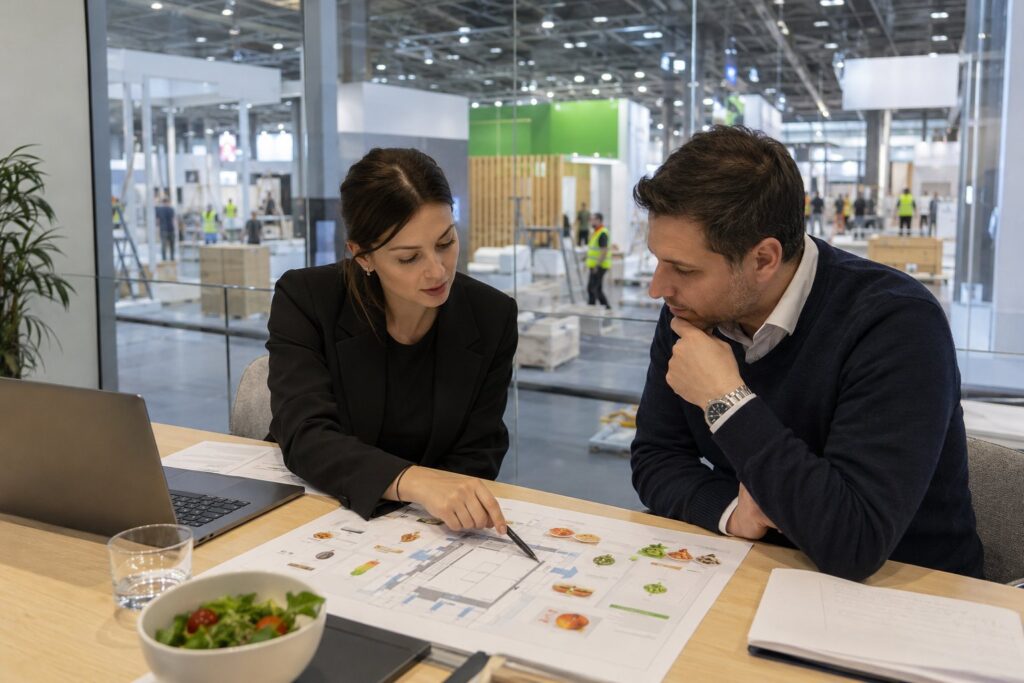
A good tailored programme starts with your own documents. The trainer should review your HACCP plan or food safety management system and build sessions around your real risks, for example:
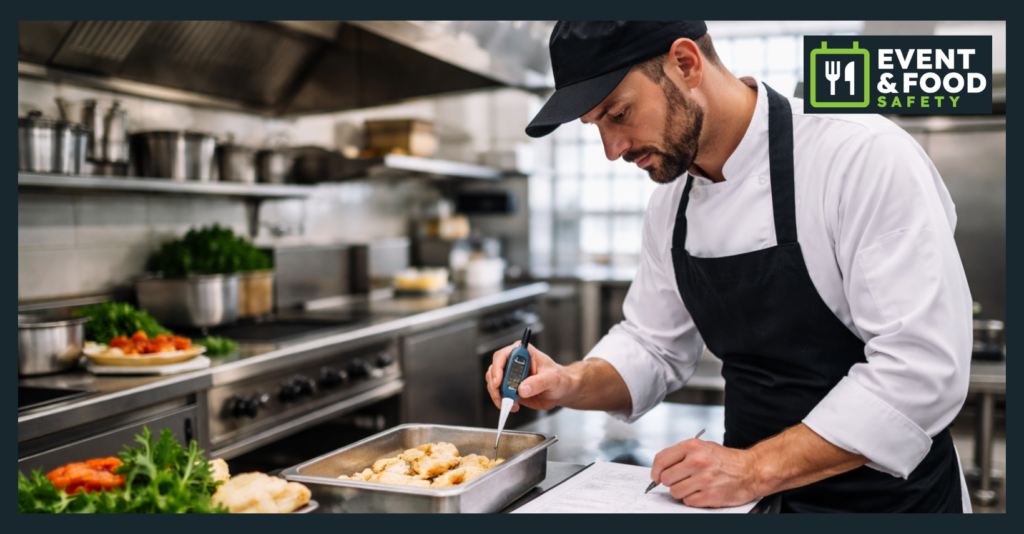
- temperature monitoring with the equipment you actually use
- food handling and cross-contamination controls for your menu
- how to label products and manage allergens
- cleaning schedules and chemical use
- what each role is responsible for, and who to tell when something goes wrong
If a trainer does not ask to see your food safety plan, it is not really bespoke.
Building Bespoke Training Around Standard Food Safety Courses
For most businesses, the most practical and cost-effective route is two layers:
- A recognised course for the syllabus and the certificate. A level 2 food safety course covers the essential knowledge for food handlers. Our online courses are designed and delivered by a Chartered Environmental Health Officer through short videos, endorsed by the Institute of Hospitality and accepted by local authorities. Level 2 takes about 3 hours and Level 3 about 6 to 7 hours, with no time limit, an 80% pass mark, unlimited retakes at no extra cost and an instant digital certificate.
- A site-specific induction written by you. A supervisor walks each new starter through your food safety plan, allergen matrix, temperature checks and cleaning schedule, and both of you sign a record. Level 3 includes a unit on staff training that helps supervisors do this well.
That combination meets the regulation (training plus instruction and supervision), gives every person a certificate, and costs far less than paying a trainer to visit for each new starter.
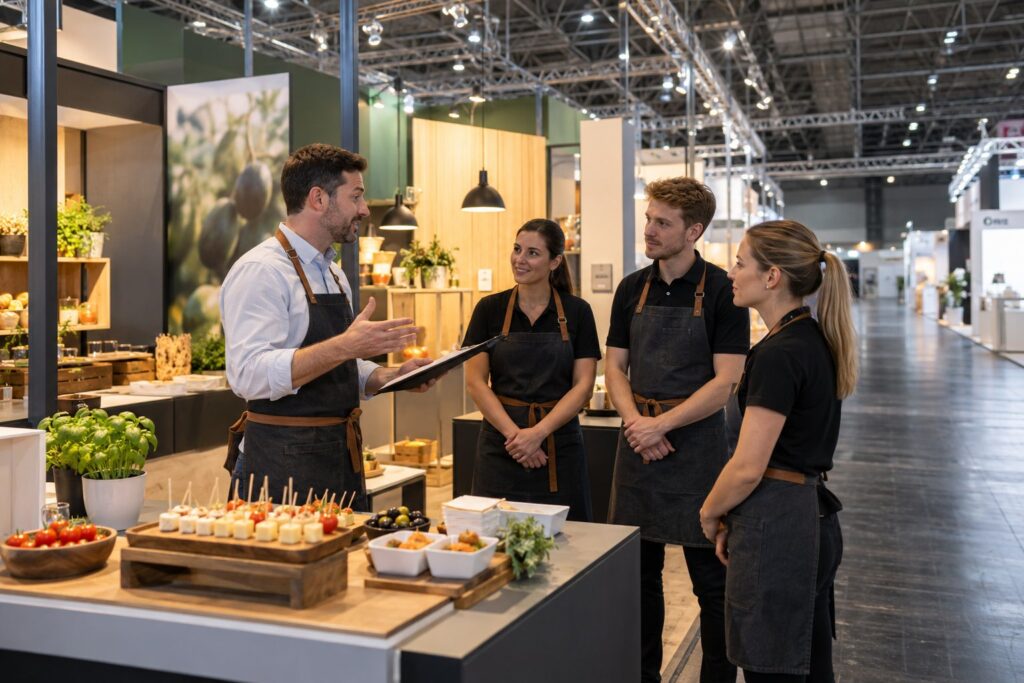
Training a Team at Once
You can buy places for a whole team in one order. Bulk discounts apply automatically from five places, you invite each person by email from your account, and you can see who has finished. See our training page for details.
For Exhibitors at Trade Shows
If your team serves or samples food at exhibitions, your bespoke layer is the stand briefing: products and allergens, hand washing on the stand, temperature checks and what to say if a visitor asks a question you cannot answer. Our guide to food hygiene training for stand staff has a ready-made briefing outline.
Choosing a Bespoke Food Safety Trainer
If you want a trainer to design and deliver a tailored course, ask:
- What food safety qualifications and enforcement or industry experience does the trainer have?
- Will they review your HACCP plan and visit or see your premises before designing the course?
- Will you get a written course outline and training records for every attendee?
- Does the course lead to a certificate, and is it accepted by local authorities?
- Can they show references from businesses like yours?
Your local authority food safety team can also tell you about training it provides or recommends.
Who Needs Bespoke Food Safety Training?
Your business is most likely to benefit if you:
- have complex food preparation processes or high-risk foods
- want to improve your food hygiene rating after an inspection
- employ staff with varied levels of experience or language needs
- are introducing new food safety procedures or equipment
- run food service at venues or exhibit food at trade shows, where conditions change from event to event
If you organise events or run a venue, food safety advice often matters more to you than training. Our event safety service covers exhibitor document checks and on-site advisers, and our venue safety service covers audits of venue food outlets.
Frequently Asked Questions About Bespoke Food Safety Training
What is the difference between standard and bespoke courses?
Standard courses follow a fixed syllabus. A bespoke course adapts the content, delivery and examples to your business and your food safety management system.
Do I need a certificate?
The law requires training and supervision rather than a specific certificate, but a certificate is the simplest way to prove training to an EHO, an employer or an event organiser. Our guide on how to get a food hygiene certificate explains the options.
How often should training be refreshed?
Most businesses refresh food hygiene training every three years and update the site-specific part whenever the menu, products or procedures change. See how long Level 2 certificates last.
Next Steps
The right training is the one your team finishes, remembers and uses. Start with the course that fits each role, then add your own site-specific instruction. Food safety knowledge sticks when it is about your own kitchen or stand. Browse our online food safety courses, or read our guide to the best Level 2 food hygiene course.