Food can turn from a joy into a crisis in a single service.
I have seen that pressure up close at events, in temporary kitchens, and in busy catering operations where one missed check can trigger waste, complaints, or far worse. That is why a clear food safety management system matters so much. You can contact us for a quick quote on a system tailored to your needs. It gives your team a working method, not a pile of vague promises.
Quick Answer
A food safety management system is the practical set of procedures, checks, records, and actions a food business uses to keep food safe. In the UK, it should be based on HACCP principles, which means spotting each hazard, setting controls, checking critical control points, keeping records, and taking corrective action when something goes wrong.UK guidance says food businesses must have food safety procedures based on HACCP principles, and small caterers can use the Food Standards Agency’s Safer Food, Better Business packs as a starting point.
If you need help building or improving your system, Event & Food Safety also offers FSMS-related consultancy and event food safety management support, alongside venue compliance services and bespoke food safety training.
What A Food Safety Management System Really Means
A food safety management system is not a binder that sits on a shelf.
It is the day-to-day way you manage food safety.
That means your management team knows what could contaminate food, what temperatures matter, what cleaning standard applies, what allergens need control, and what records prove the work happened. A strong food safety management system turns good intentions into repeatable action.
In plain terms, an FSMS covers the steps you take to protect food from contamination, keep food products safe to consume, and show an EHO that your procedures are real. This includes understanding what catering qualifications are needed for your specific business type. It is also part of your due diligence if there is a complaint, a recall, or an investigation into foodborne illnesses. UK rules make this more than best practice. If you run a food business, having HACCP-based procedures is a legal requirement.
I explain it to clients like this: your system is the map, your records are the proof, and your team is what makes the map come alive. This operational culture is why food hygiene is vital to event safety as a whole.
HACCP Is The Foundation Of Every FSMS
In the UK, most food safety management systems are built on HACCP.
HACCP stands for Hazard Analysis and Critical Control Point. The Food Standards Agency says HACCP is a way of managing food safety hazards by looking at what could go wrong, identifying critical control points, deciding limits and checks, and keeping records to show the controls work.
A proper hazard analysis asks practical questions.
Where could chilled food drift out of range?
How could raw and ready-to-eat food mix?
What happens if a probe fails, a fridge breaks, or a supplier issue creates a recall risk?
This is where many businesses get stuck. They know they need a HACCP plan, but they do not know how to implement it in a kitchen, a trailer, a marquee, or a temporary bar. That is why I treat implementing a food safety management process as an operational task, not a paperwork task. The best FSMS makes food safety part of service, prep, storage, transport, and delivery.
Your controls may include:
- temperature monitoring
- cooking and reheating limits
- cleaning schedules
- allergen management
- supplier checks
- stock rotation
- staff training
- a daily checklist
Those controls should match your real operation. A fixed-site restaurant, a mobile caterer, and an event concession stand do not face the same food safety risks.
The Key Elements Of A Food Safety Management System
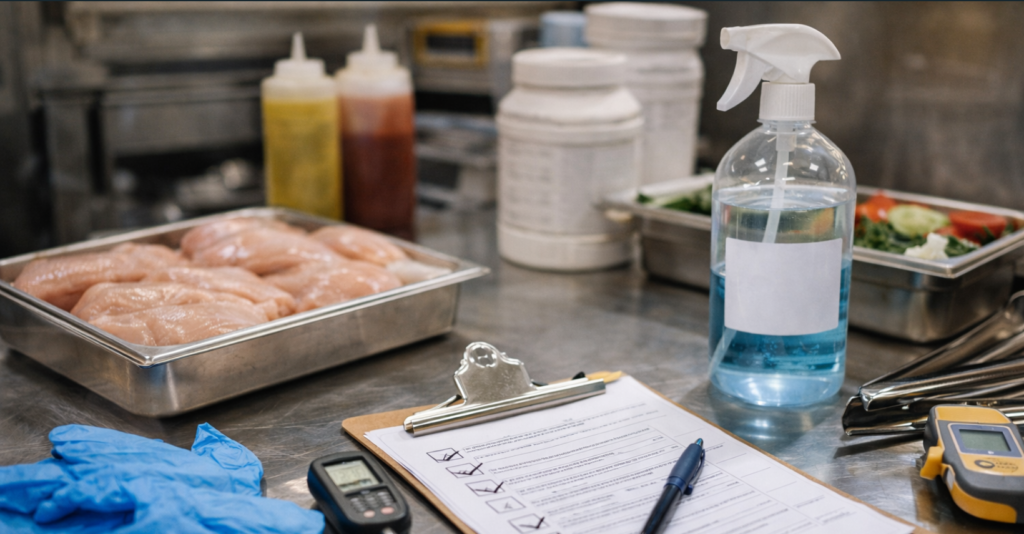
The key elements of a food safety management system should be clear, practical, and easy for team members to follow.
I like to keep the core structure simple:
- Identify each hazard linked to your menu, process, people, and site.
- Decide the critical control steps that keep food safe.
- Set limits for time, temperature, storage, cleaning, and separation.
- Record checks so procedures are being followed.
- Create corrective steps when standards are missed.
- Review the whole system through verification and an internal or external audit.
These are the elements of a food safety approach that protect consumers and protect your business at the same time. When your records, training, and checks line up, you can reduce the risk of unsafe food reaching the public.
A solid FSMS should also cover:
- personal hygiene
- cleaning and disinfection
- waste control
- pest awareness
- allergen management
- traceability
- staff competence
- what to do during product recalls
This is also where your food hygiene rating can feel the impact. The Food Standards Agency says the Food Hygiene Rating Scheme gives businesses a rating based on hygiene standards after inspection. A clear, working food safety management system supports that result because it shows organised control, not guesswork.
Do You Need One If You Run An Event Or Mobile Catering Business?
Yes, if you handle, prepare, serve, store, transport, or sell food, you need a safety management system in place.
This matters even more in events.
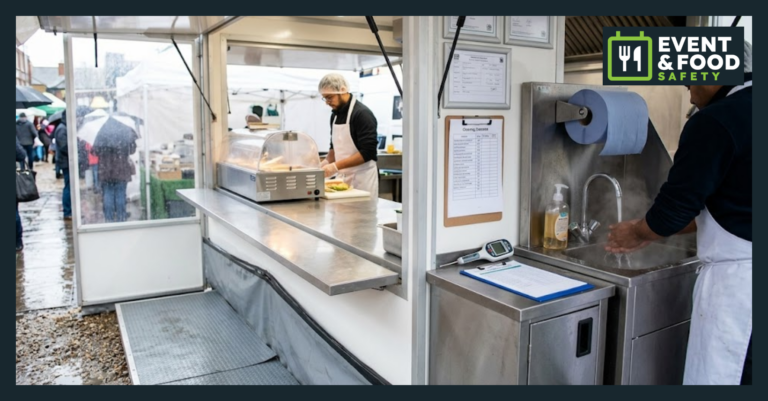
An event kitchen is not calm. You may face weather, uneven power supply, restricted water access, short service windows, changing staff, and tight delivery schedules. That means the risk of foodborne illnesses can climb fast if your controls are weak.
I have found that event operations need a tighter, more portable system than a brick-and-mortar site. Your FSMS may need to cover temporary refrigeration, off-site prep, van loading, hot holding in transit, and emergency action if equipment fails. Food safety isn’t a paper exercise at events. It is a live control tool.
For event operators, this usually means:
- a sharper opening and closing checklist
- stronger temperature records
- clear ownership for team members
- extra focus on delivery, transport, and holding times
- faster corrective actions when something slips
This is where our sector focus matters. Event & Food Safety offers event safety guidance, venue safety support, accredited Level 2 and Level 3 Food Hygiene and Safety for Catering training, and consultancy built around live service environments.
Why Digital Food Safety Management Systems Are Growing Fast
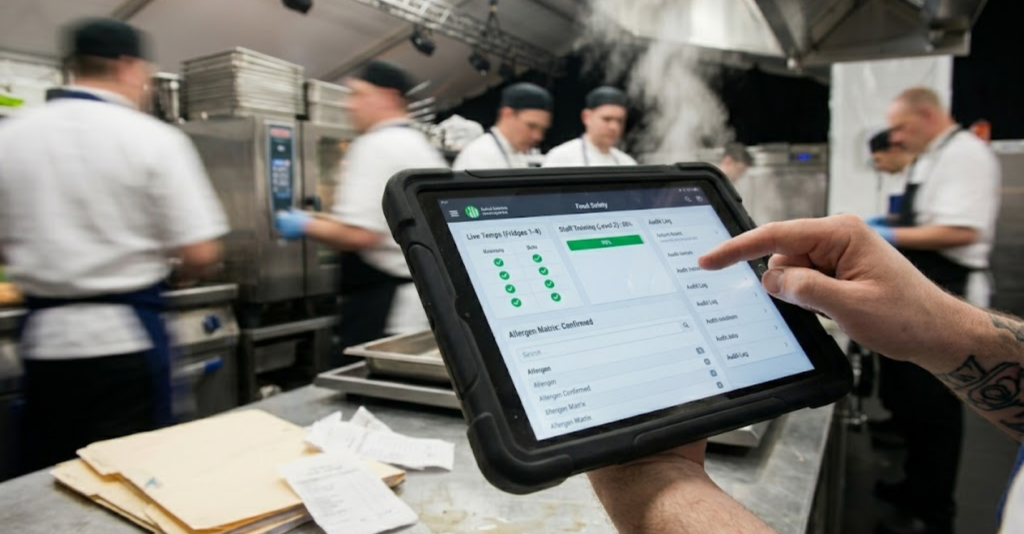
A digital food safety management system cuts clutter and gives management cleaner records.
Paper folders still exist, but they fail in familiar ways. Sheets go missing. Staff forget entries. Ink fades. Managers cannot spot patterns until an inspection lands.
A digital approach can make food safety management easier to track, review, and update. I see more businesses move to digital systems because they want records that are searchable, shareable, and easier to review across sites or events. That shift also supports faster management decisions and stronger proof during an audit.
For many teams, the challenge is not whether to go digital. It is how to implement the right process without overcomplicating the job.
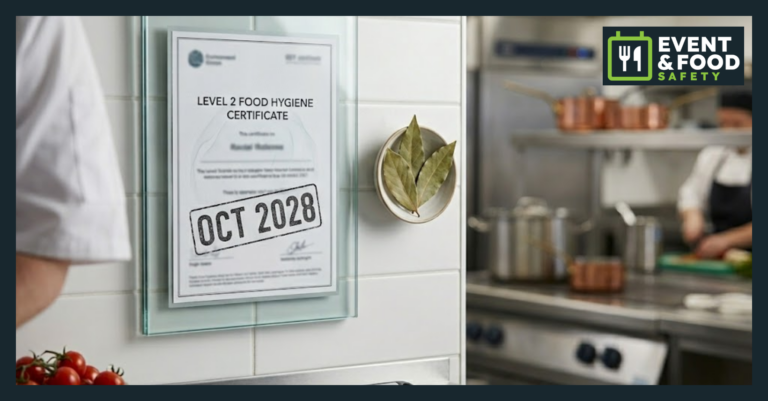
That is where training matters. Event & Food Safety’s Highfield-accredited Level 3 course covers supervisory responsibility and HACCP principles, which is ideal for the people who must make food safety management part of daily operations. Their bespoke training also adapts to your operation, whether you run a venue, festival kitchen, or pop-up unit. Many operators choose to take a food hygiene course online to ensure staff are certified quickly and efficiently.
How To Start Implementing An FSMS Properly
Implementing an FSMS starts with honesty about what your operation actually does.
Map the journey of your food.
Look at delivery, storage, prep, cooking, cooling, service, and cleaning.
Then build controls around the points where food can become unsafe.
I always suggest three first steps:
- review your menu and process flow
- list your real food safety hazards
- assign checks to named people, not job titles
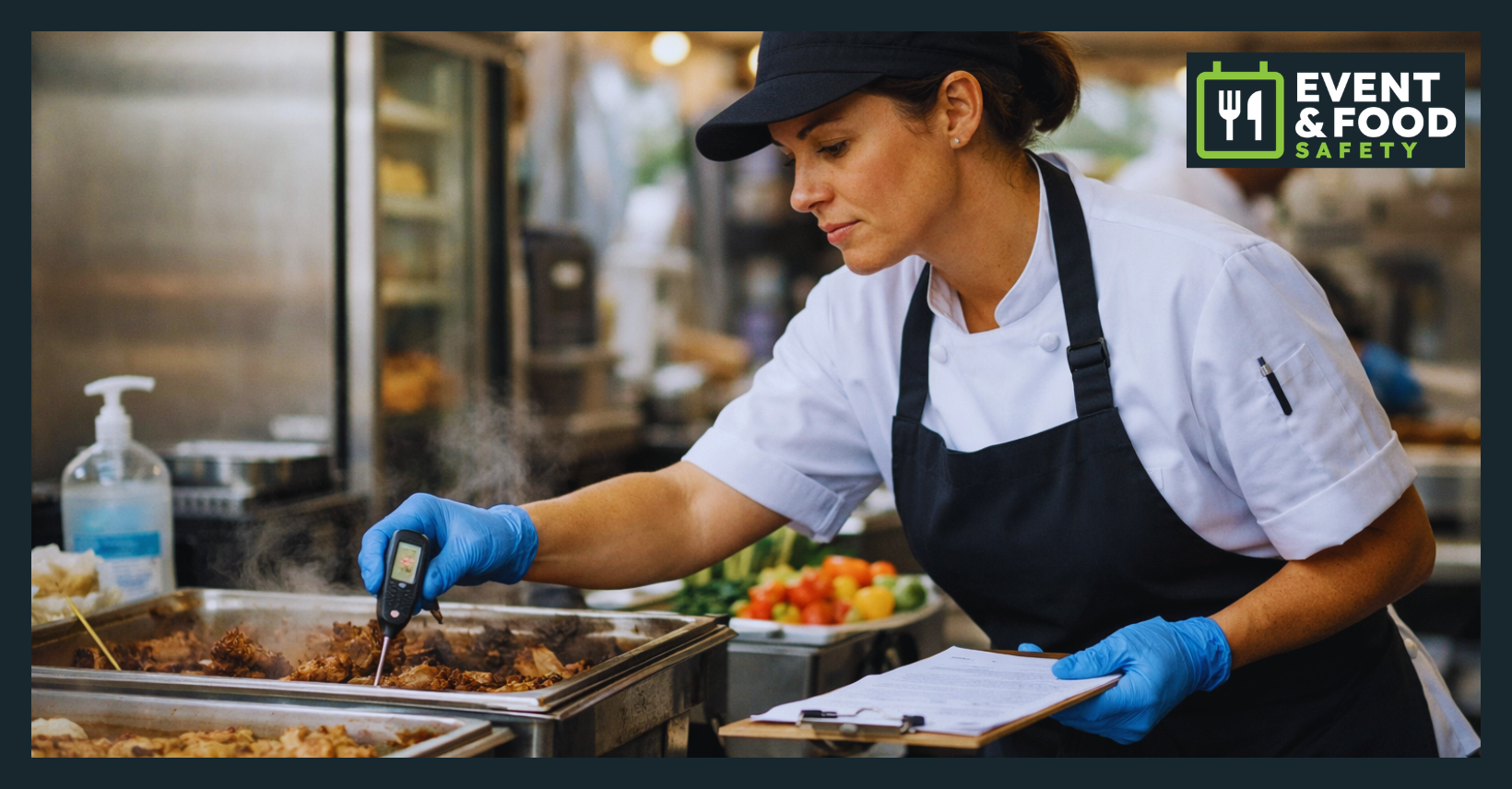
This is also the stage where tools matter. If temperature control is one of your critical control points, use reliable equipment. Event & Food Safety’s shop includes options such as the Thermapen® One for fast probe readings, the FoodCheck Thermometer & Probe for routine kitchen checks, and the UKAS-certified fridge and freezer thermometers for ongoing fridge and freezer monitoring.
Those records can safeguard your business, minimise waste, and avoid costly disruption, including legal action after serious food safety incidents.
Final Thought: Do You Need A Food Safety Management System?
If you run a food business, you need one.
Not because forms impress inspectors.
Because good systems help you make food that is safe, protect your customers, stay compliant with food safety regulations, and show a real commitment to food safety.
If you want support, I would point readers to three useful next steps on the Event & Food Safety site: the guide on Who Needs a Level 3 Food Safety in Catering Course?, the article on Top FSA Audit Services for Event Vendor Compliance, and the piece on Where Can I Get Bespoke Food Safety Training?. Those pages connect training, verification, and practical implementation in a way that fits the UK event and catering world.
A strong food safety management system does more than tick a box.
It protects people.