Rain on the canopy. Mud underfoot. A queue building fast. That is where food safety gets real.
I have seen traders put huge effort into menus, branding, and prep, then get caught out by one basic point during an inspection. Not the food itself. The setup around it. For a temporary unit, EHO compliance comes down to one question: can your food business keep food safe in a field, street pitch, or market stall as well as in a fixed kitchen?
Quick Answer
A food stall needs six things for EHO compliance: registration, a protected and cleanable structure, a dedicated hand-wash unit with warm running water, safe temperature control, on-site paperwork, and trained staff who follow strong food hygiene routines.
Miss one of those, and your food hygiene rating can suffer.
Food Business Registration And The Core Food Safety Laws
Your first compliance step happens before service starts.
If you sell food, store it, prepare food, or handle food, you need to register with your local authority. That applies to a market stall, trailer, van, or other mobile food businesses.
Register Before You Trade
A food business in the UK must register before trading begins. This is one of the key food safety laws that applies to temporary and permanent setups alike.
A food business without registration starts in a weak position before an inspection even begins. Many vendors choose to hire a food safety consultant to ensure their initial registration and setup meet all local requirements.
Temporary Premises Still Need Full Compliance
A temporary pitch does not get lighter treatment under UK law.
A street food business still has to meet food hygiene regulations and wider food safety and hygiene standards. The structure may be temporary, but the duty to ensure food is safe stays the same.
Environmental Health Checks The Stall Before The Food
The shell around your food matters as much as the menu.
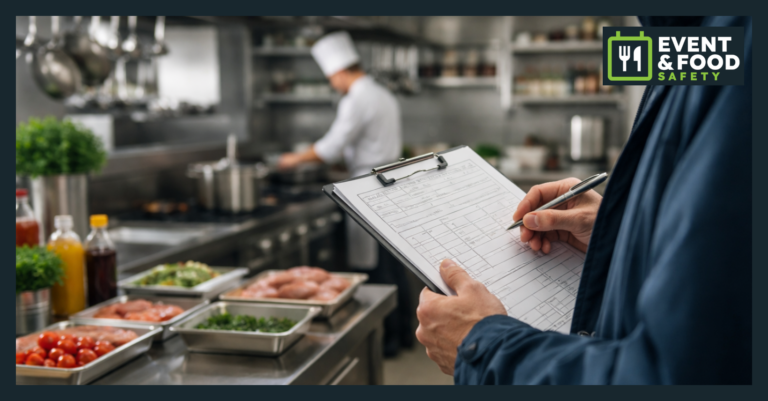
An EHO will inspect the whole stall, not just the dishes. They want to see a setup that protects food from dust, rain, pests, birds, and customer contact. Understanding how often EHOs visit and what triggers an inspection can help you stay prepared year-round.
Protection From Weather And Contamination
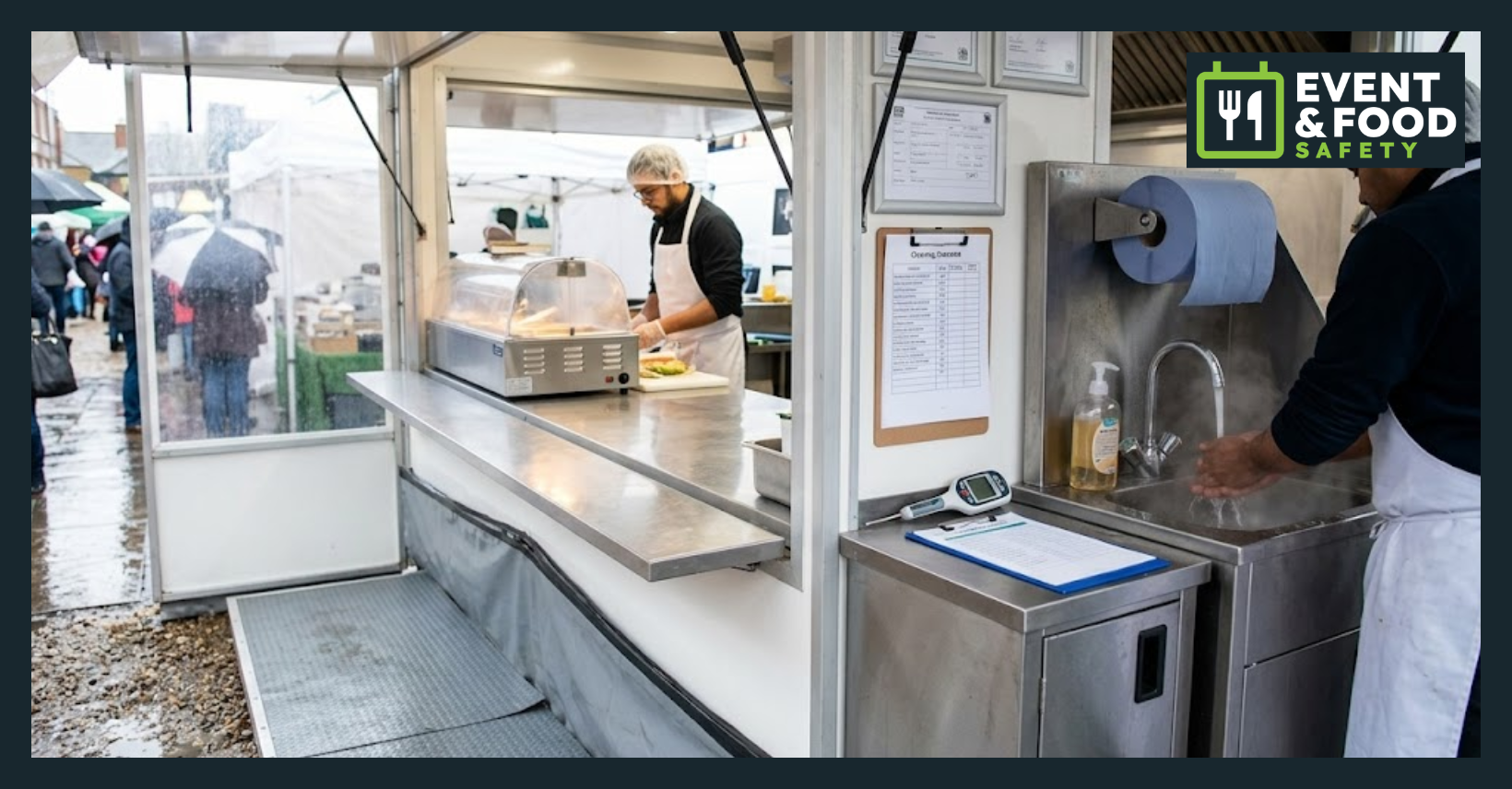
Your stall needs a roof and, in most cases, three sides or another setup that shields the food preparation area.
Protection is a core part of food safety, not a cosmetic extra. I have seen open-fronted stalls look smart, then fail once the wind pushes dirt and drizzle into the work space.
Flooring And Surfaces Must Be Cleanable
If your stall is on grass, mud, gravel, or dirt, you need a durable, non-absorbent floor covering that can be cleaned. Heavy-duty lino or plastic matting works well.
Tables, containers, and food storage equipment should also be smooth, washable, and in good repair. Damaged surfaces can contaminate food and weaken hygiene and safety.
Personal Hygiene And The Hand-Wash Unit Rule
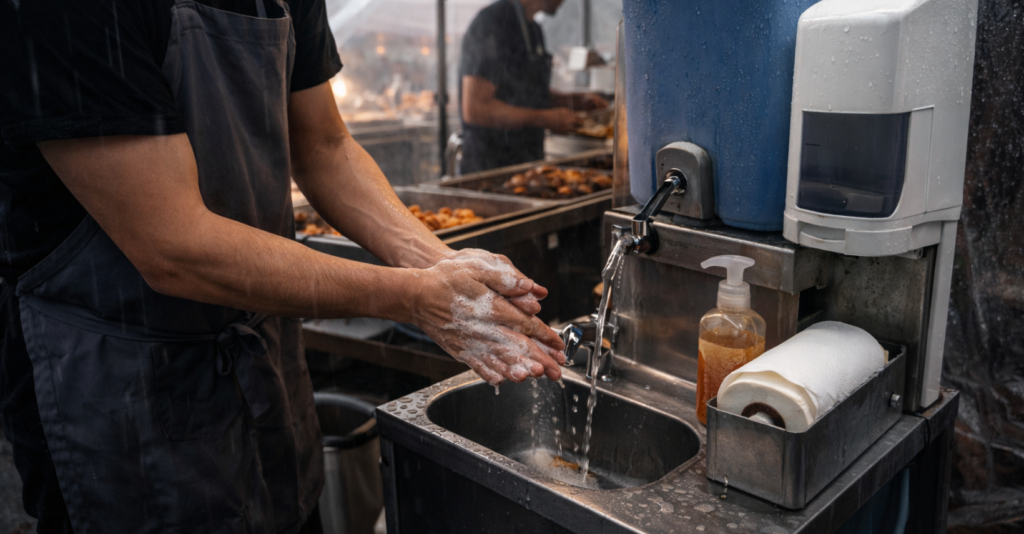
This is one of the main reasons food stalls fail an inspection.
A bowl of cold water is not enough.
Warm Running Water Is Non-Negotiable
Your hand-wash point must provide constant warm running water, soap, and paper towels.
That is the standard EHOs expect because food handlers must be able to wash properly during service. A kettle, a spray bottle, or a basin of still water does not meet the mark.
A proper hand-wash setup shows that food hygiene and safety are built into the stall.
Keep Hand Washing Separate
The hand-wash unit must be separate from any sink used for utensils, raw food, or food preparation.
That split matters. Food safety and hygiene depend on clear separation between hand cleaning and equipment washing.
Food Handlers Must Follow Good Personal Hygiene
Food handlers must wash hands before they handle food, after touching raw food, after cleaning, after waste handling, and after taking payment.
Good personal hygiene protects safe food and cuts the risk of food poisoning.
Food Storage And Temperature Control In A Field
Cold chain control is where strong traders stand out.
High-risk food must stay under control even when you are far from a permanent fridge.
Keep Chilled Food Cold
Chilled food must stay at safe temperatures during transport, storage, and service. That means using reliable cool boxes, refrigerated units, or chilled transport for food for sale.
Food is stored safely only when you can prove the temperature of food stays under control.
Keep Hot Food Properly Held
If you hot hold food, it needs to stay above the legal threshold during service.
Food must always stay cold enough or hot enough, not just at setup.
That matters for cooked food, chilled food, and any other high-risk type of food.
Use A Probe Thermometer And Record Checks
Do not guess.
Use a probe thermometer to check the food and confirm the temperature throughout the food, not just the outside. Record those checks during service. A calibrated probe thermometer is one of the most practical tools you can carry to a pitch, and browsing a dedicated range of food safety thermometers is a good starting point if you need a reliable one.
My event-day list is simple:
- Keep chilled food cold.
- Keep hot food at a legal holding temperature.
- Separate raw food from cooked food and ready-to-eat items.
- Record checks during trading.
- Throw food away when control is lost.
Food Safety Management System And On-Site Records
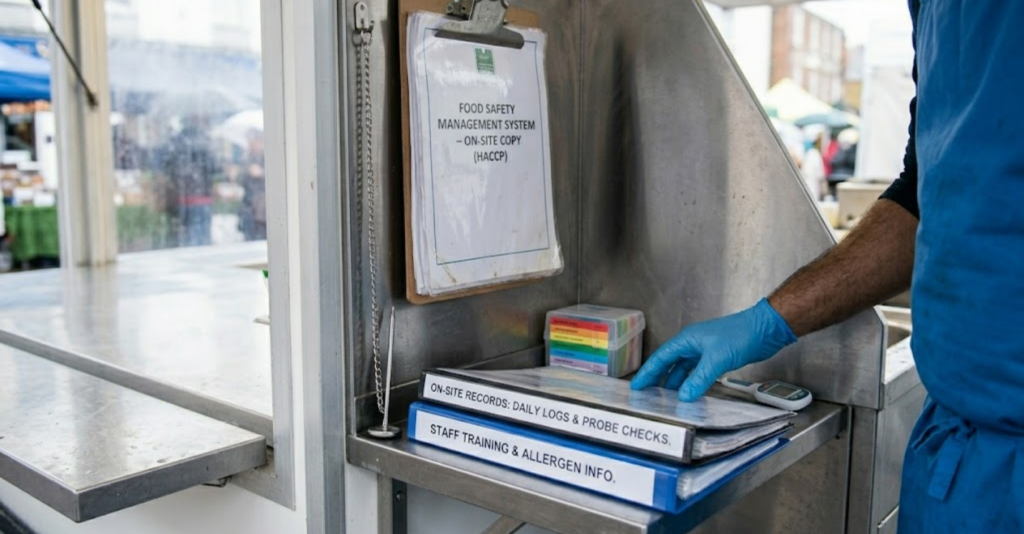
Paperwork left at home does not protect your business.
A food safety management system shows how your food business controls risk in real working conditions.
Keep Your Food Safety Management System On Site
Your food safety management system should be at the stall during trading hours.
That may be based on HACCP or Safer Food Better Business. The point is the same. The EHO needs to see how your food safety management works in practice. Ensuring your documentation is water-tight is much easier when using FSA audit services for event vendors before the season starts.
If you cannot show it on the day, an officer may assume it is not happening.
Bring The Records That Matter
Keep opening checks, cleaning logs, probe records, and allergen information on-site.
Keep Staff Training Records Available
Training records should be present too. They show that staff are trained in food hygiene matters, understand hygiene practices, and know what could compromise food safety during service.
Food Hygiene Ratings, Training, And The Final EHO Test
A smart setup still fails if the team does not know what to do.
The final result depends on the structure, the system, and the people using it.
Food Hygiene Ratings Reflect The Full Picture
Food hygiene ratings are based on what the officer finds during inspection.
That includes cleanliness, food storage, confidence in management, and whether your food business can keep standards in place. To understand exactly how a food hygiene rating is calculated, it helps to know what officers score and how each area is weighted.
A poor food hygiene rating can damage trust fast.
Level 2 Training Gives Staff A Strong Base
Food handlers need training that matches the work they do.
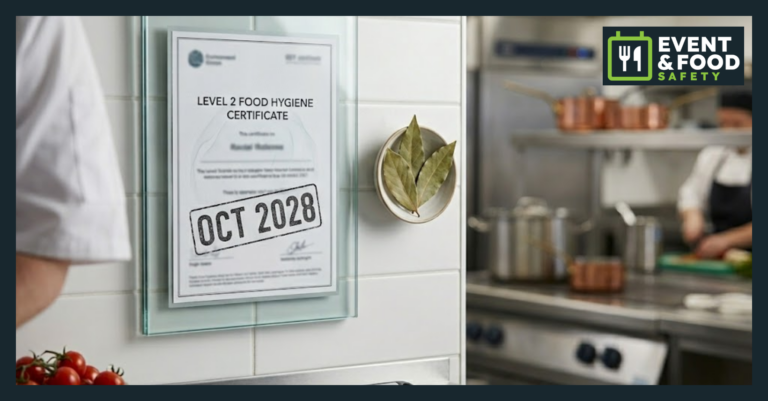
For many traders, a Level 2 food hygiene course is the right starting point. It gives staff a practical grasp of food hygiene legislation, hazards, and daily controls. If your team is spread across multiple events, it is now straightforward to complete hygiene certification through an online course before the season begins.
Allergen Control Still Matters
A small stall does not remove allergen duties.
If you sell food, you must provide accurate information on food allergens and manage cross-contact risk for loose items and pre-packed food. Knowing the 14 major allergens and how to communicate them clearly is a basic requirement for every food handler on your team.
Food businesses must treat allergen control as part of core food safety.
If you want to build genuine confidence in allergen procedures, structured food safety training courses cover allergen management alongside the full range of hygiene and safety topics your team needs.
The Bottom Line
An EHO wants proof that your stall can produce safe food under pressure.
For me, the winning setup is plain: register on time, build a protected stall, install proper hand washing, control temperatures, keep records on-site, and train your team well.
Do that, and your food business can meet strong food safety standards in a temporary setup.
Miss those basics, and even great food can lead to complaints, enforcement action, or food poisoning.